Description
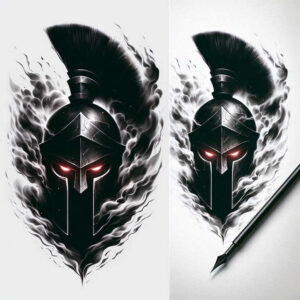
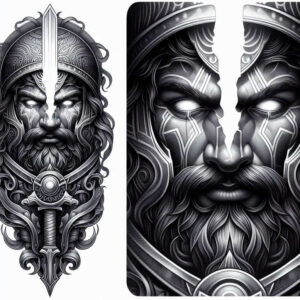
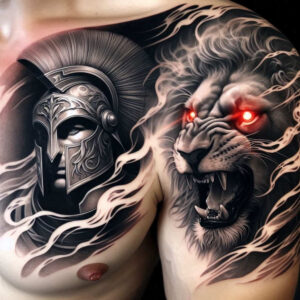
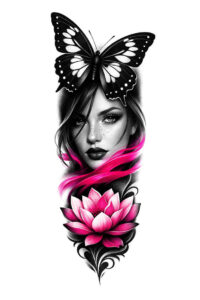
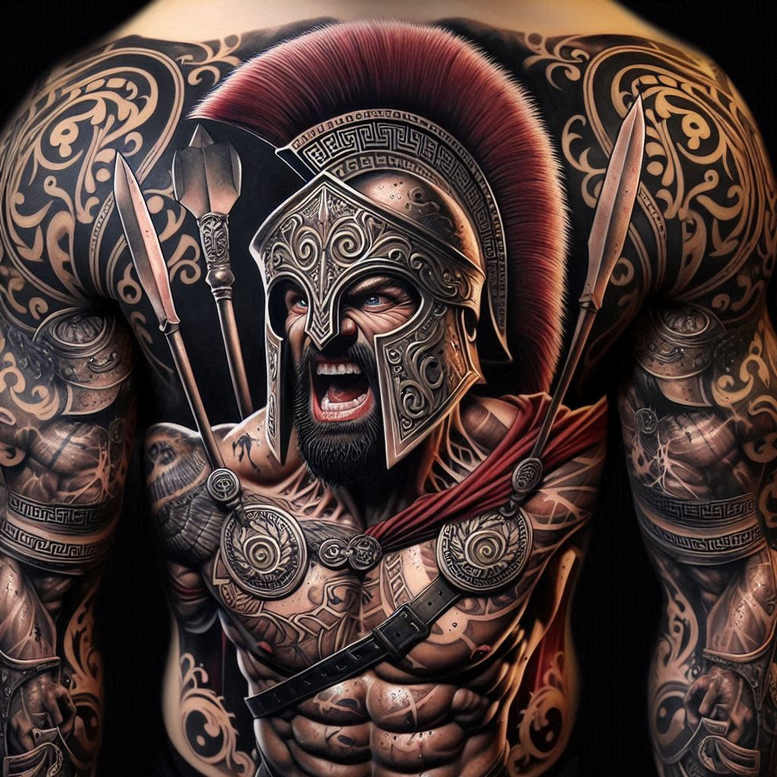
This image presents a battle-hardened gladiator figure rendered as a full-back style tattoo concept. A meticulously detailed helmet crowns a muscular chest, with scrollwork and beadwork carved into the metal, while a red cape flows behind like a dynamic banner. The composition emphasizes black and grey shading, with crisp linework that defines both flesh and armor and a pervasive decorative pattern that covers limbs and torso. Spear tips flank the figure, and circular medallions linked by leather straps echo ancient motifs, creating a cohesive narrative of power and discipline. The tattoo design leverages fine line technique and high-contrast shading to achieve a lifelike sense of depth, while the ornamental patterns weave across skin in a labyrinth of spirals, filigree, and geometric motifs. From a symbolic standpoint, the gladiator evokes valor, sacrifice, and ancient martial culture; the helmet conceals identity and focuses attention on the eyes and breath of the wearer, reinforcing the idea of a hidden strength beneath the skin. The piece reads as a narrative of courage and endurance, suitable for those seeking meaningful tattoos that marry realism with decorative patterning. Being an AI-generated tattoo project, this concept showcases how digital tools can craft intricate, pattern-heavy designs intended for body art. While the original image is dark—dominated by black ink and shadow—the design is explicitly presented as a cover-up option: broad coverage on the torso and arms can neatly obscure lighter, older markings while preserving the dramatic impact of the new work. Keywords such as tattoo, tattoo design, meaningful tattoos, fine line tattoo, lotus flower tattoo, infinity tattoo, tribal tattoo, rose tattoo design, small tattoos, flower tattoos, custom tattoo design, Japanese style tattoo, black and grey, realistic tattoo, body art, and ink are woven into the descriptive narrative to signal its applicability across contemporary ink projects. This description doubles as an overview suitable for a magazine feature on modern knightly portraits, emphasizing how the blend of mechanical ornament and human anatomy can create a timeless piece that remains legible at different scales and across skin tones.