Description
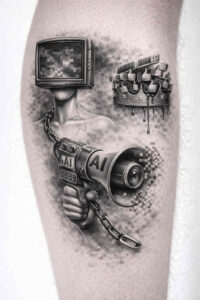
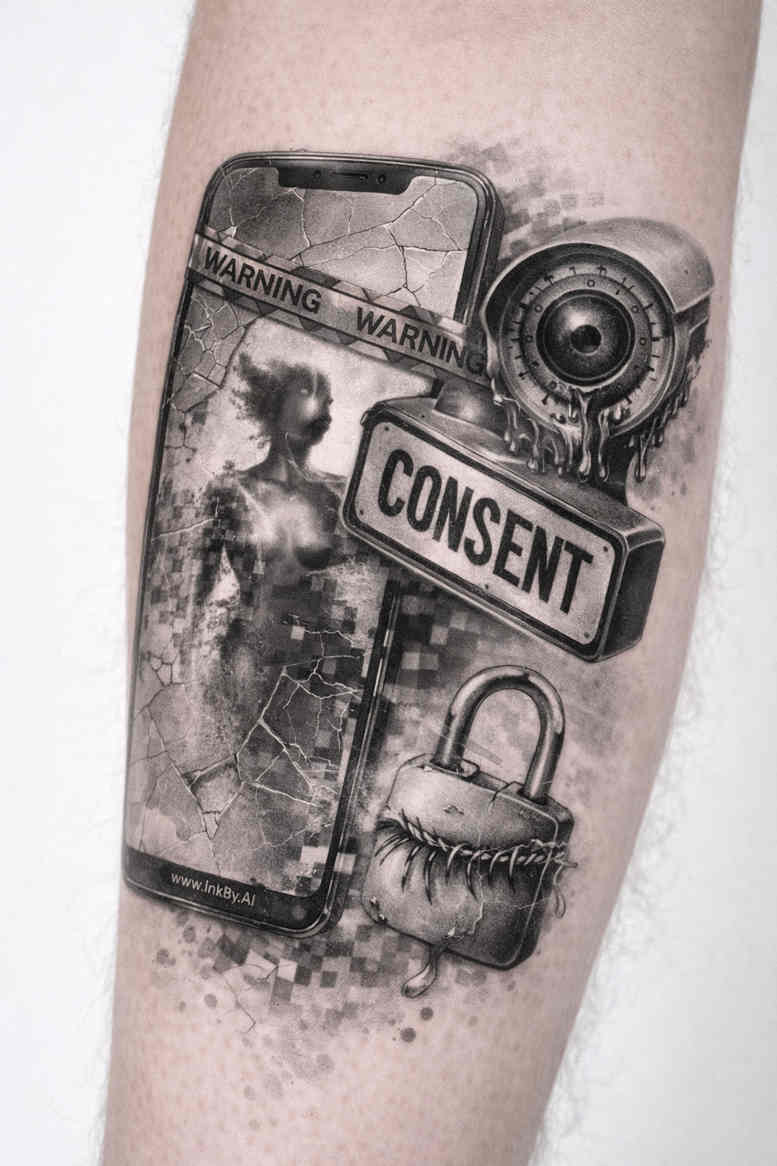
Presented as a tight black-and-grey realism study, this tattoo design centers a detailed padlock anchored by a rugged chain, with a banner bearing the word ‘Consent’ cutting across the hardware. The artist renders reflective metal textures, granular skin-tone shading, and soft highlights to mimic light on aged metal, using grayscale gradations to convey depth and weight. The padlock sits slightly tilted, its body carved with dents and a shackle that peers through dark shadows, while the banner wraps the lock in a dynamic diagonal line that guides the eye from top left to bottom right. The chain threads through the design, creating a secondary rhythm and suggesting restriction or protection. The composition uses negative space to emphasize the contrast between metal and skin, and the shading strategy relies on soft transitions and crisp edges to create a tangible, almost tactile feel. The banner’s letters appear as negative spaces, rather than bold relief, allowing the eye to linger on the iconography rather than the text. The motif carries layered symbolism: the padlock evokes privacy, security, and personal boundaries; the consent banner reframes that boundary as an active choice rather than a passive guarantee; the chain hints at continuity, connection, or restraint depending on placement and wearer intent. Executed in a photorealistic vocabulary, the piece leans toward hyper-detailed linework and subtle specular highlights that simulate brushed metal, rusted pings, and worn edges. The design’s balance between hard geometry and soft shading makes it legible at medium sizes, preserving readability if scaled down for forearms or calves, while the strong diagonal flow adds dynamism suitable for a vertical canvas. As with many AI-generated tattoo concepts, real-world adaptation by a skilled tattoo artist would adjust line weights, shading gradients, and skin tone interpretation to maintain contrast across years of aging, but the core narrative remains clear: a powerful comment on autonomy expressed through a single emblematic image. This concept underscores how AI-generated designs can seed meaningful conversations about consent, boundaries, and empowerment, presenting a compelling starting point for a client seeking a bold, story-driven piece that can double as a cover-up option if desired.