Description
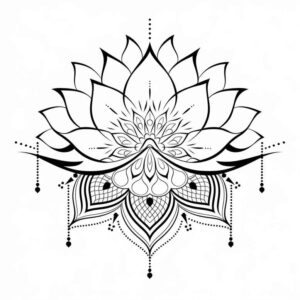
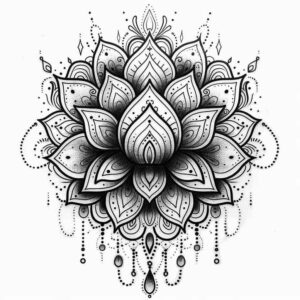
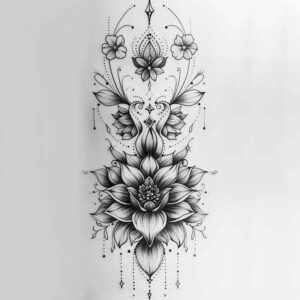
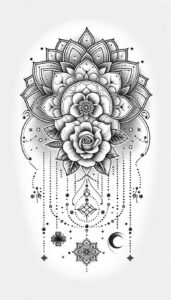
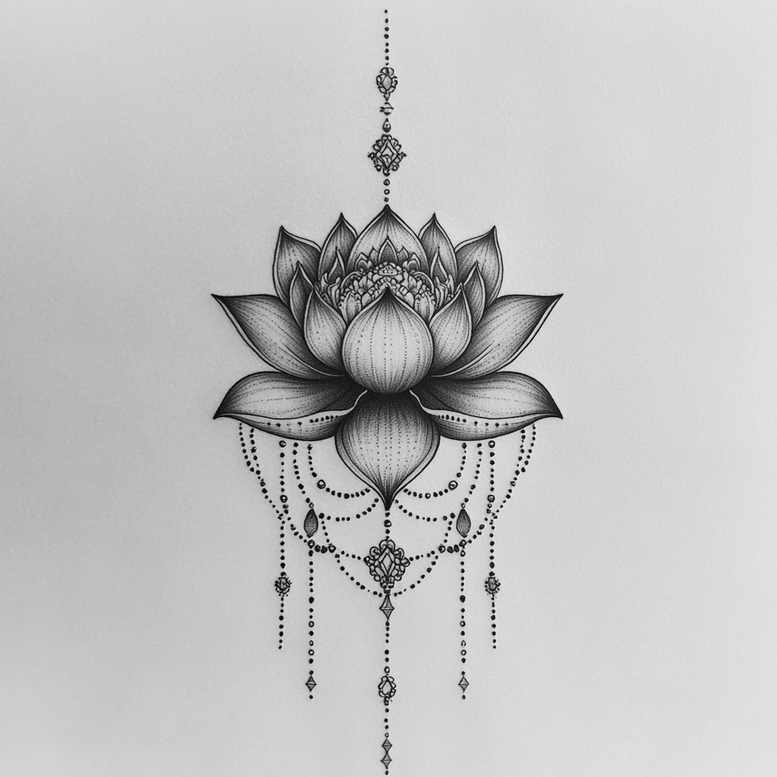
This AI-generated tattoo project presents an refined lotus blossom composed of layered petals and ornate beaded strands. Executed in thin, precise linework with careful shading, the lotus sits at the center of cascading chains and pendants that descend symmetrically from a delicate string at the top. The artist employs stippling and pointillism to render the beads, creating subtle tonal variation that reads as black and grey ink on skin. The petals use fine lines and soft gradations to evoke a sense of depth, while the central opening hints at inner peace and spiritual growth. The beaded strands frame the blossom, forming vertical symmetry and ornamental weight; diamonds and small teardrop shapes punctuate the chains, giving the piece a jewelry-like appearance. This design straddles floral symbolism with decorative jewelry motifs, making it suitable as a meaningful tattoo design for someone seeking elegance and subtle intricacy. In a Japanese-inspired or modern ornamental style, the lotus carries meanings of renewal, enlightenment, and resilience. The black and grey palette ensures timeless versatility for various skin tones, and the delicate lines support a fine line tattoo aesthetic. For collectors of small tattoos or those considering a larger cover-up, this project offers a versatile blueprint: the lotus can be scaled, the beads lengthened or shortened, and the overall composition adapted to limb or back placement. The motif can be deployed as a standalone piece or integrated into a sleeve layout, while the surrounding negative space emphasizes the grace of the central bloom. This AI-generated tattoo project demonstrates how graphic patterns and dotwork can enrich classic floral subject matter, yielding a modern, refined body art design that reads as both delicate and bold. The lotus tattoo design embodies a timeless fusion of nature and ornament, and the micro-detailing invites close inspection. As a concept, it stands as an ideal study for a refined cover-up piece, where the darkness of surrounding imagery could be replaced by the unobtrusive contrast of black ink on grey skin.