Description
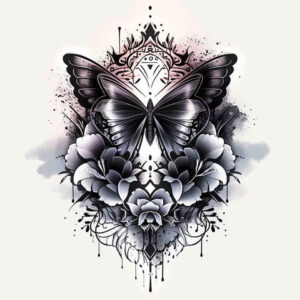
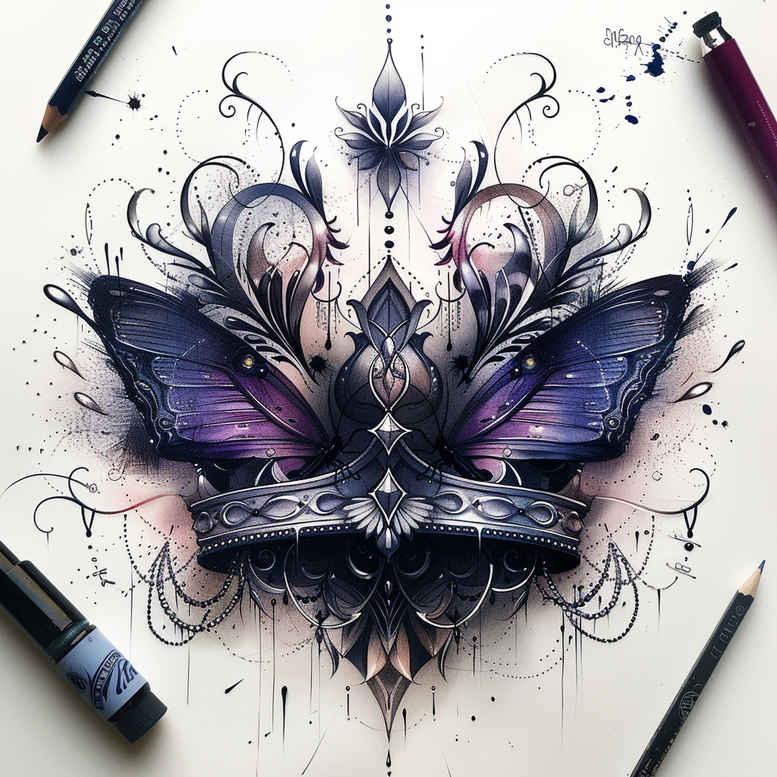
This AI-generated tattoo project presents a dark, symmetrical butterfly crown design set in a geometric, mandala-inspired frame. The centerpiece is a butterfly with wings rendered in deep purple and electric blue, edged with crisp black linework and subtle shading that gives a sense of dimensionality. A stylized crown sits atop the insect, its motifs blending geometric facets and ornamental flourishes that radiate outward with balanced rhythm. Delicate filigree swirls and negative shapes interweave around the motif, creating a pattern-heavy composition that remains readable on skin when scaled. Because the design features dense black areas and layered linework, it is particularly suitable for cover-up work, offering strong coverage while preserving a striking silhouette. The piece leans into contemporary fine line tattoo aesthetics and ornamental geometry, bridging modern ink technique with traditional tattoo design sensibilities. The color palette—purple, indigo, and blue accents against black ink—lends drama without sacrificing clarity in smaller sizes, making it adaptable for placements from the shoulder to the upper arm or back. Symbolically, the butterfly evokes transformation, while the crown conveys authority and personal sovereignty, making this a meaningful tattoo design for those seeking growth and resilience. The composition nods to flower tattoo motifs and geometric patterning, with potential for variations such as lotus flower tattoo elements, infinity tattoo lines, or rose tattoo design accents, all within a single, custom tattoo design concept. For readers seeking ink with a contemporary edge, the design maintains legibility and longevity through decisive linework and gradient shading, qualities essential to body art and ink. The piece also leans into Japanese style tattoo sensibilities and floral geometry, while allowing room for black and grey shading alongside color accents to suit individual skin tones and preferences. AI-generated tattoo projects like this illustrate how digital tooling can guide artists toward precision, consistency, and creative exploration, while remaining adaptable for small or large tattoos and a variety of placements; it remains especially suitable as a cover-up option whenever prior work demands concealment.