Description
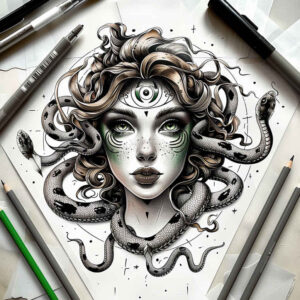
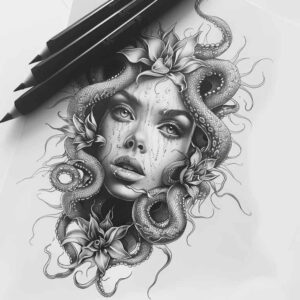
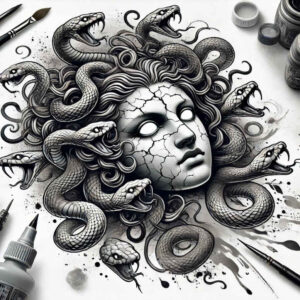
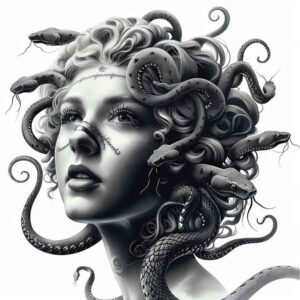
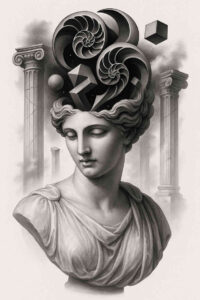
This piece presents a Medusa-inspired portrait rendered in a tight black and grey palette using a refined fine line technique. The central figure—a woman’s face—emerges with a piercing gaze, while serpents unwind from her hair in sinuous coils. The snakes are detailed with scales and subtle shading to create depth without heavy fill, balancing contrast and negative space to keep the composition readable on the skin. The surrounding lines vary in weight, from ultra-thin strands to bolder contours, producing a sense of motion and tension that suits both small tattoos and larger canvases. The design embraces classic tattoo design elements: linework, stippling, and shading to achieve a realistic yet stylized look. The piece works well as a stand-alone tattoo or as part of a larger body of work, aligning with meaningful tattoos that symbolize transformation, danger, protection, or inner strength. For placement, the portrait can wrap along the forearm, calf, or shoulder, with the serpents offering a natural boundary for curvature. The reference draws upon black and grey realism traditions, while staying firmly in the realm of fine line tattoo aesthetics, ensuring clarity and longevity over time. The tattoo design concept also nods to broader genres—Japanese style tattoo motifs, tribal linework, and small flower tattoos—by focusing on clean lines, subtle shading, and mindful composition, all conducive to a custom tattoo design that feels timeless. In terms of technique, the artist employs controlled needlework, layered shading, and precise dotwork to achieve depth without solid blocks of ink, which is ideal for a refined look on skin. This AI-generated tattoo project highlights how modern AI-assisted concepts can fuel creative exploration while still respecting traditional ink techniques, offering a strong foundation for a commissioned or personal tattoo that remains legible as it ages. If the aim is to conceal previous ink or alter an existing piece, the heavy dark elements and confident linework make it an excellent candidate for a cover-up, as the surrounding negative space can be strategically extended to disguise old work while preserving the new narrative.