Description
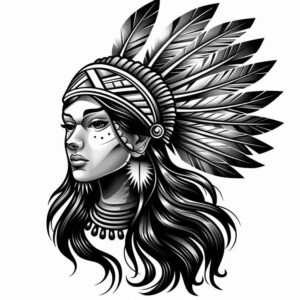
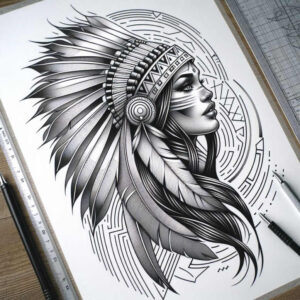
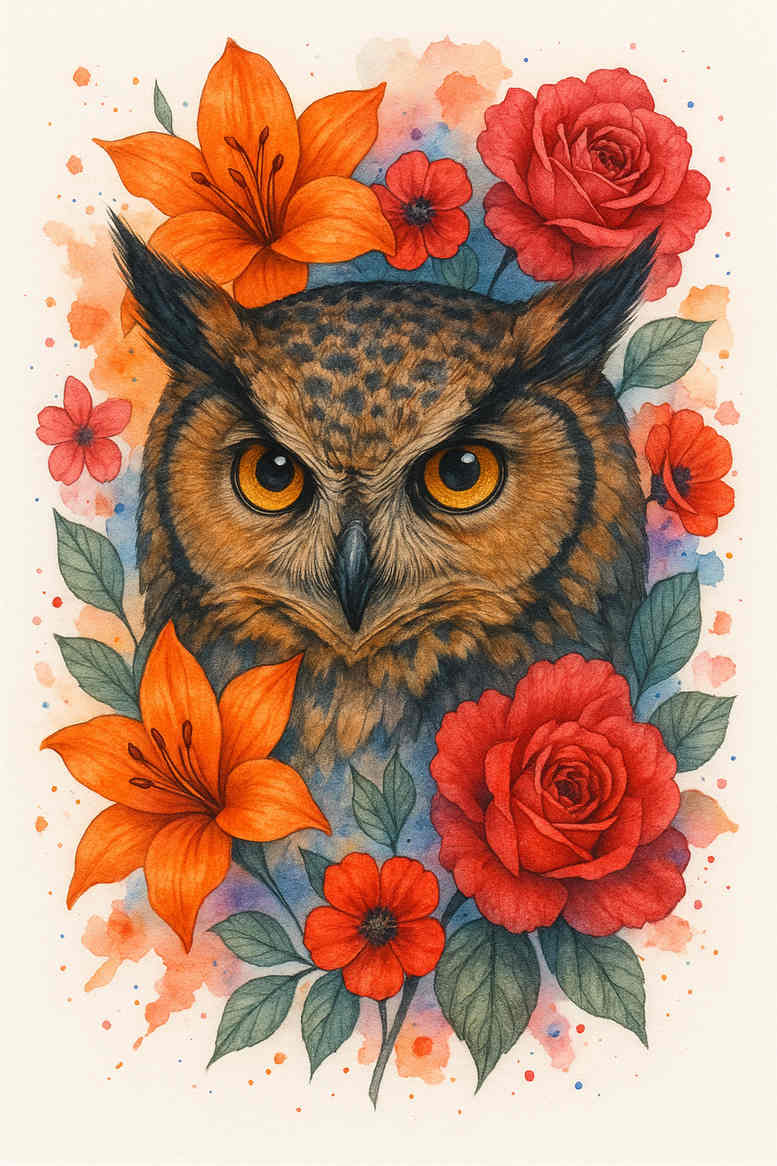
AI-generated tattoo project concept presented as a painterly, full-color portrait of a woman wearing a feathered headdress. The image employs a watercolor-inspired approach with fluid color transitions, luminous chroma, and ink-like edges that give the impression of skin art rather than a simple print. The dominant palette blends scarlet reds, cobalt teals, and gilded golds that interplay with black linework to define feather shapes and the silhouette of the face. The headdress is composed of layered feathers radiating outward in a rhythmic pattern, creating a graphic motif that emphasizes movement and ceremonial presence, while the subject’s profile conveys a focused, serene gaze. This concept leverages bold feather patterns that could translate into a tattoo design with strong contrast and dynamic flow for a large-scale piece on the shoulder, back, or sleeve, or adapted to a smaller format as a refined fine line tattoo. The composition fuses cultural motifs with contemporary body art aesthetics, nodding to tribal tattoo and Japanese style influences while remaining accessible as a modern color tattoo. The piece invites adaptation in various styles, from black and grey to full color, depending on client preference, with the color version particularly striking for a statement tattoo. As an AI-generated tattoo project concept, it serves as a starting point for a meaningful tattoo design and custom tattoo design workflow, offering avenues for refining line density, shading, and color density to ensure legibility at different scales. The emphasis on pattern and motif repetition guides placement and sizing decisions, while symbolism drawn from feathers suggests themes of freedom, heritage, and transformation. In broader terms, this concept can be explored through meaningful tattoos such as lotus flower tattoo, infinity tattoo, or rose tattoo design motifs, and can be integrated with other motifs to create a cohesive body art narrative, including textual or Japanese-inspired line work, further reflecting the evolving landscape of tattoo trends and ink artistry. Practically, a tattoo artist would translate the painterly look into solid line work and shading strategies, deciding whether to preserve the watercolor softness or convert it into crisp color blocks. The design’s graphic patterning suggests repeating elements that can scale from a small inner forearm piece to a full back panel, still maintaining readability and impact. This approach aligns with modern trends toward expressive color, bold silhouettes, and bespoke, custom tattoo design, appealing to clients seeking unique, culturally resonant ink.