Description
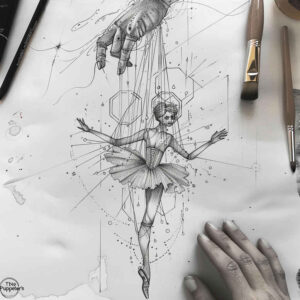
This image presents a meticulous geometric tattoo design study, captured on white paper and framed by technical pens. A central circle anchors an orbiting network of lines, dots, and smaller rings, creating a symmetrical composition that feels both celestial and mechanical. The piece foregrounds a fine line tattoo aesthetic, where clean black ink on the skin can achieve precision through delicate line work and thoughtful spacing. Though this is a planning sketch, it serves as a ready-to-develop tattoo design blueprint: the construction lines, radii, chords, and anchor points guide needle placement and ensure legibility when scaled to wrist, forearm, or shoulder. The geometric pattern invites integration with floral motifs, such as a lotus flower tattoo or a rose tattoo design, offering variations within the same circular framework. The result is a versatile template for small tattoos or larger panels, balancing rigidity and rhythm to evoke movement without sacrificing clarity. The black and grey palette emphasizes line weight and negative space, a hallmark of modern tattoo art, while maintaining compatibility with realistic tattoo techniques and the longevity of ink on skin. For those seeking a meaningful tattoo, the concept conveys ideas of balance, unity, and cycles, making it suitable for custom tattoo design projects across Japanese style tattoo and contemporary geometric traditions. In practice, artists can translate these geometric rules into a durable tattoo plan, testing iterations with pencil and ink before committing to skin, reflecting the careful craftsmanship of body art and ink work. This is an AI-generated tattoo project concept, illustrating how algorithmic geometry can inform a timeless tattoo design while preserving the hand of the tattoo artist.