Description
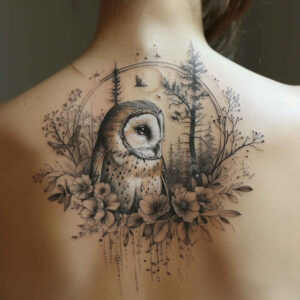
An owl head rendered in a delicate black-and-grey fine-line approach is presented as a pencil study that translates into a refined tattoo concept. The composition centers on the alert eye, the curve of the beak, and the texture of feathers achieved through crisp line work and subtle shading, creating depth without heavy fill. This concept reads as a portable tattoo design, versatile for small placements such as the inner forearm or behind the ear, yet capable of scaling up for a sleeve or back piece if a client desires more presence. The image is initially a graphite study, but its vocabulary aligns with tattoo design practice: clean lines, high contrast around the eye, and feather patterns that read clearly when inked in black and grey. Artists can adapt the motif to various styles, from ultra-fine line to more realistic black and-grey tattoo, or infuse light Japanese style tattoo detail in feather texture for a balanced look. Symbolically, owls convey wisdom, mystery, and nocturnal vigilance, making this design meaningful for clients seeking meaningful tattoos that combine nature and intellect. The piece also offers practical considerations for tattoo planning: negative space around the eye helps maintain crisp visibility, while the feather textures can be built up with gradual shading to enhance realism. While the referenced sketch uses pencil shading for tonal guidance, the final tattoo can be executed with high precision on skin, leveraging techniques that emphasize line integrity and smooth gradients. If desired, this concept can serve as a cover-up option, given its central focal point and the ability to obscure existing ink beneath carefully placed negative space and careful line work. This concept fits within the broader categories of ink artistry, including fine line tattoo, black and grey, and custom tattoo design, with potential to align with tribal or Japanese style influences depending on client preference. Note: AI-generated tattoo projects may inspire such concepts, offering a modern starting point for a hand-drawn-like study that translates well into skin, ensuring the resulting tattoo design communicates both artistry and intention, while remaining adaptable to client specs and artist technique.