Description
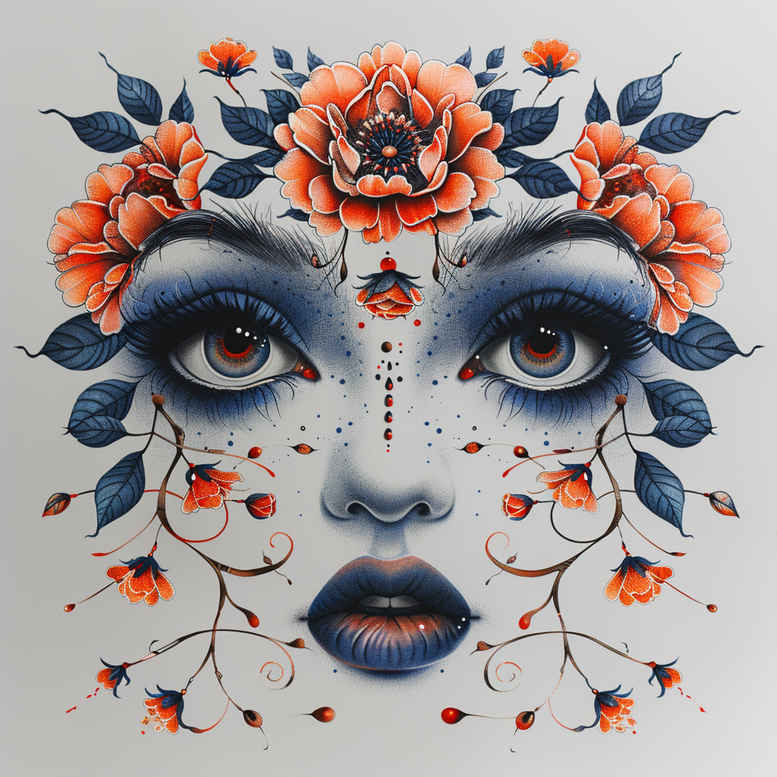
This AI-generated tattoo project presents a refined illustrative concept that merges realism with decorative flora into a cohesive facial portrait. The central motif is a tranquil face rendered with soft shading and blue ink accents that lend a cool, contemplative mood around the eyes and jawline. A crown of orange roses sits gracefully atop the head, interlaced with dark leaves and slender vines that trace along the cheeks and temples, forming a symmetrical frame that emphasizes rhythm and balance. Subtle dotwork, micro-splatter, and a light lace-like pattern embellish the surface, turning the composition into a graphic pattern without sacrificing the clarity of the figure. The color relationship — vivid orange, deep blue, and muted greys — creates drama while remaining highly wearable, a hallmark of modern black and grey and color tattoo traditions. Although the design reads as a portrait, the floral elements tether it to timeless symbolism: growth, renewal, and the beauty of change, with the roses acting as a classic rose tattoo design anchor within a larger body-art narrative. The piece leans on fine line tattoo techniques to achieve crisp outlines and delicate shading, allowing it to scale from small tattoos to larger placements on the arm, chest, or back while preserving clarity of form over time. For collectors seeking meaningful tattoos, this concept offers a versatile template that can be adapted into Japanese style tattoo or Western botanical motifs, or reimagined as a lotus flower tattoo and infinity tattoo hybrid, depending on client preference. The proposal also demonstrates how AI-generated concepts can inform custom tattoo design practice, offering precise patterning guidance, motif placement, and color planning that indie artists can translate into skin with confidence. As a complete package, it blends a modern geometric sensibility with organic floral imagery to deliver a striking, gallery-ready tattoo design that respects tradition while inviting personal interpretation. Due to the graphic pattern elements and floral framing, the motif adapts well to cover-ups where incoming color can blend with underlying lines. Artists can experiment with line weight, gradient shading, and layering to preserve readability on different skin tones. The crown of blossoms serves as a focal anchor while the face remains the heart of the image. In terms of tattoo design history, the composition nods to Japanese style tattoo silhouettes and tribal linework in its bold contouring, yet keeps a contemporary sensibility through delicate dotwork and botanical detailing. The research behind this concept emphasizes the enduring appeal of flower tattoos and portrait tattoos as meaningful tattoos that convey personal narratives. The AI-generated nature of the concept positions it as an inspiration rather than a final stencil, inviting tattooers to customize proportions, pose, and color emphasis to suit individual anatomy and aesthetic goals. In practice, the design translates into a versatile, timeless image that can carry intimate symbolism for clients, while remaining visually striking in both color and monochrome formats. The result is a refined body art concept that demonstrates how ink, line, and pigment can work in concert to produce a sophisticated tattoo design that resonates with wearers seeking expressive, meaningful tattoos.