Description
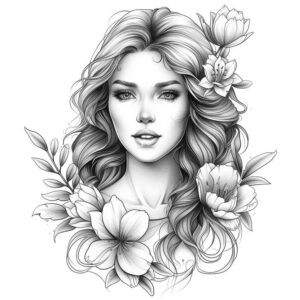
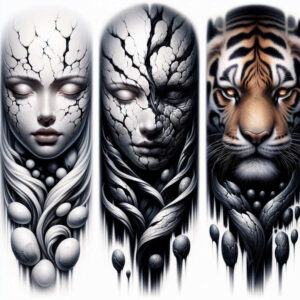
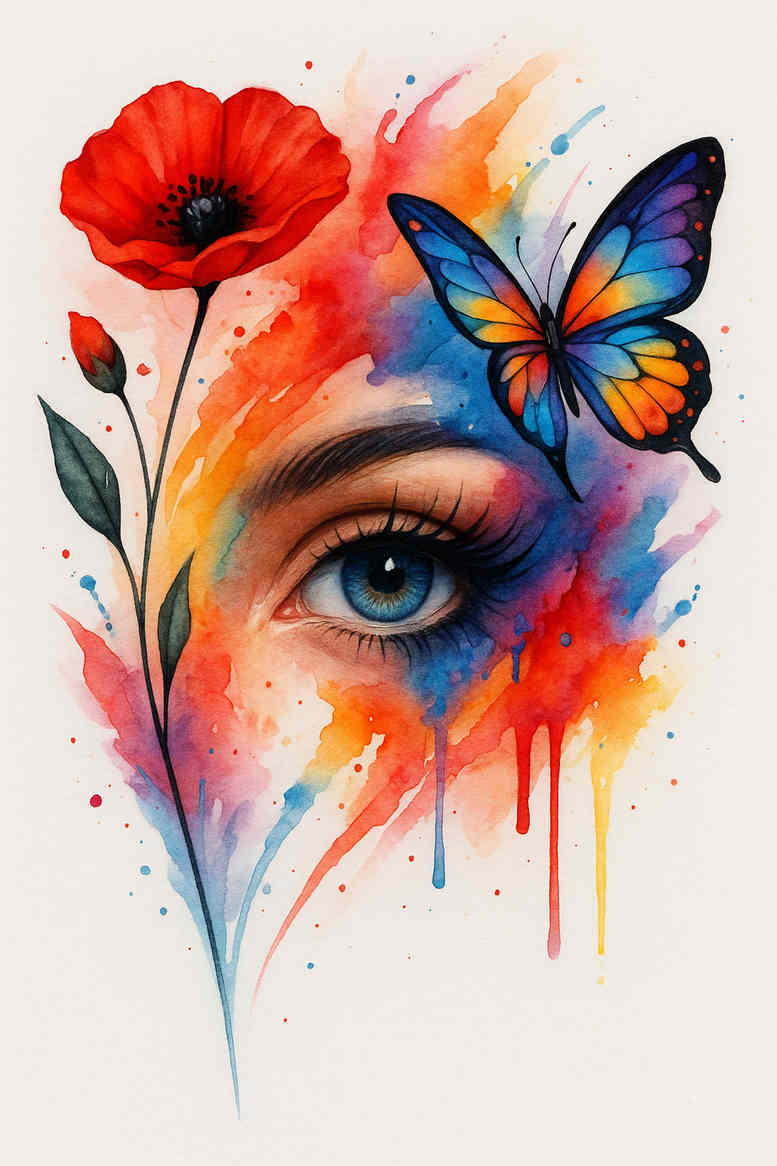
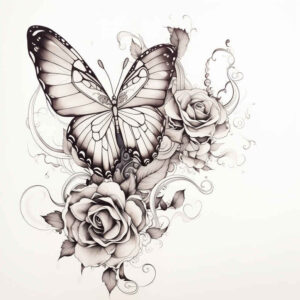
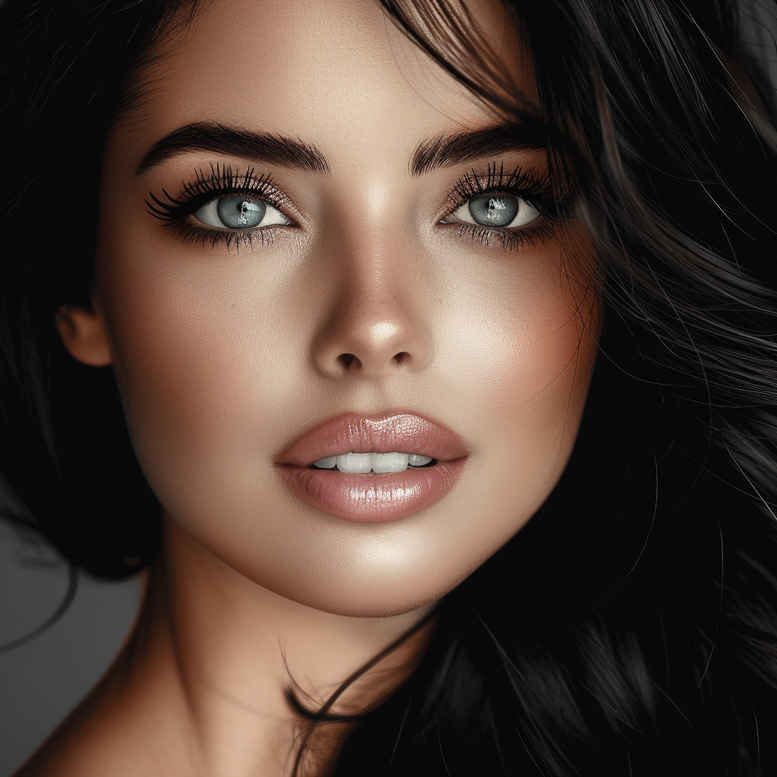
Within studio lighting, this portrait presents a refined tattoo design concept intended for cover-up reference and inspiration for tattoo enthusiasts. The composition centers on the model’s face framed by dark, glossy hair, with a strong, luminous gaze that could be translated into inked linework or shaded fields. The eyes, rendered with a cool blue-green brightness, offer a focal point that can anchor a micro-realistic motif such as a lotus flower tattoo or a delicate rose tattoo design, using fine-line techniques and subtle stippling. The lips are softly glossy, providing a natural counterbalance to the architectural lines that could be echoed in a geometric pattern around the jawline. The skin holds a warm, natural gradient with careful soft shading to mimic skin tone under tattoo ink, enabling a tattoo artist to plan black and grey or colorwork that respects anatomy and light. This image reads as a portrait study but also functions as a versatile concept for tattoo translation: a small, refined piece to adorn the temple, behind the ear, or the nape, or a larger Japanese-style or tribal motif that weaves floral elements with negative space. For those seeking meaningful tattoos, the concept supports a range of directions—from a subtle fine-line tattoo to more elaborate full-sleeve narratives that harmonize with facial features. If extended into a larger composition, the piece can accommodate infinity symbols or geometric frames around the eye, while preserving realism in shading and texture. Because this is an AI-generated tattoo project concept, it invites designers to explore how portrait photography can inform an ink-ready design, bridging body art, studio lighting, and illustrative linework. The description emphasizes key elements—line weight, shading, negative space, and floral symbolism—while hinting at potential variations in color scheme, from black and grey to selective color that preserves the portrait’s mood. The result is a flexible blueprint for tattoo design exploration that remains faithful to the model’s expression and anatomy, yet clearly adaptable to cover-up scenarios where prior ink or scars require careful masking.