Description
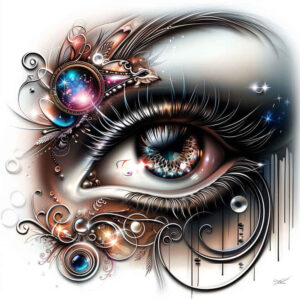
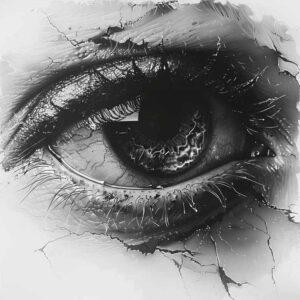
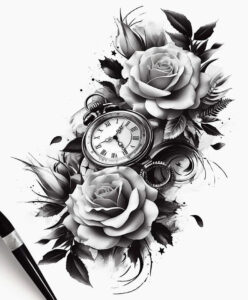
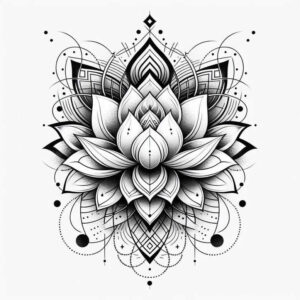
This AI-generated tattoo project presents a refined study in contrast and botanical lyricism: a close-rendered eye acts as the focal point, its brown iris shaded with subtle gradations and fine line lashes. A butterfly rests on a network of branches and leaves, while watercolor washes bleed around the forms, creating a sense of movement and atmosphere. The line work remains precise where it counts, giving the eye, butterfly, and stems clear definition, while the painterly textures approximate color without overwhelming the silhouette. The palette relies on warm browns, ochres, and muted blues rather than solid blocks, yielding a color tattoo that can transition to black and grey or stay vibrant depending on the client’s preference. Symbolically, the eye suggests perception and awareness; the butterfly signals transformation; the botanical elements anchor the piece in nature and growth—a compact narrative well suited to small tattoos or as a centerpiece in a larger sleeve or back piece. From a technical perspective, the composition blends fine line precision with painterly washes, a combination that translates well to Japanese style tattoo influences and contemporary portrait-inspired designs, as well as floral tattoo design concepts like lotus flower tattoo and rose tattoo design. As a concept for a custom tattoo design, this work demonstrates how ink can balance realism with impressionistic texture, offering meaningful tattoos with potential for both color storytelling and restrained black and grey execution. The AI origin note acknowledges the evolving role of AI in tattoo projects and invites dialogue on how such concepts can inform real-world ink practice.