Description
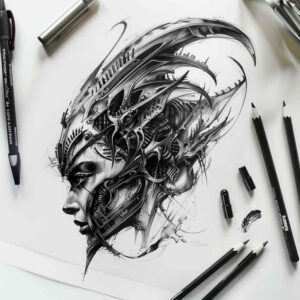
This piece presents a cover-up oriented concept featuring a Japanese samurai armor motif rendered in black and grey on a sheet of sketch paper, with crimson blossom accents that inject a bold color counterpoint. The centerpiece is a fully armored warrior, his helmet and lamellar plates rich with ornamental patterning that nods to traditional samurai iconography while embracing contemporary tattoo technique. The armor is rendered with layered tonal gradations, from near-black shadows to mid-tone greys, establishing strong contrast and durability on skin—a key consideration for cover-up work. Surrounding the figure, bright red blossoms interrupt the stern silhouette, their petals providing a vivid focal point and a sense of renewal that resonates with meaningful tattoos. The composition emphasizes crisp line work, deliberate negative space, and a dynamic diagonal rhythm that guides the eye through the design, all of which contribute to a tattoo design that remains legible even after aging. The graphic patterning on the armor—geometric plates, rivets, and filigree—adds texture and depth, creating a tactile impression that translates well to skin after transfer. From a stylistic perspective, the concept sits at the crossroads of Japanese style tattoo and black and grey realism, combining solid outlines, soft shading, and smoky gradients to evoke motion and presence. The blossoms also open opportunities to integrate rose tattoo design or lotus flower tattoo accents, enabling a cohesive narrative for larger pieces or sleeves. For a practitioner, the plan offers strong cover-up potential: dense dark areas can obscure underlying ink while retaining room for refinement in future sessions. The piece embodies the modern, AI-generated tattoo project ethos, presenting a concept that a skilled tattoo artist can refine into a finished body art work, with clear lines, careful ink saturation, and pattern-driven texture that translates across canvases, scales, and skin tones. Additionally, the design speaks to fans of fine line tattoo and traditional motifs, while remaining adaptable to custom tattoo design briefs, and is a prime example of how graphic pattern work can elevate body art into an impactful cultural statement.