Description
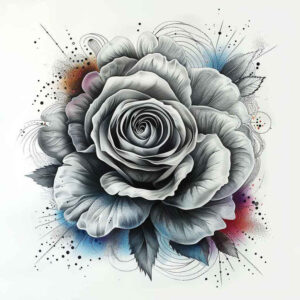
This AI-generated tattoo project concept presents a blue rose in full color, designed as a contemporary tattoo design that marries painterly realism with graphic pattern. The focal bloom is rendered in sapphire and cerulean hues, with a pink center, while subtle gradient shading traces each petal to create depth and a sense of life; crisp black outlines anchor the form, ensuring legibility in skin. Surrounding the flower are brushstroke like splashes and delicate linework that compose a cohesive pattern, elevating the piece from a simple floral study to a dynamic motif suitable for modern body art. Leaves in cool blue-grey tones frame the blossom, providing contrast and balance and reinforcing the cool color palette. Technically, the design blends fine line precision with looser washes, employing layered shading, stippling, and varied line weight to maintain clarity as the tattoo scales. The graphic pattern around the rose evokes ink wash aesthetics and contemporary tattoo trends, delivering movement without overpowering the central flower. In terms of meaning, the rose represents beauty and resilience, the blue hues suggest calm and depth, and the surrounding pattern hints at Japanese style tattoo influences while remaining accessible as a universal flower tattoo design. This concept is intended as a starting point for a custom tattoo design, illustrating how full color blooms can be integrated with graphic patterns for small tattoos or expansive pieces, and how AI-generated tattoo projects can inspire artists to craft meaningful tattoos, refine line work, and translate digital concepts into wearable ink. Placement considerations include forearm, shoulder, or calf, where color can be showcased and pattern can wrap gracefully; the piece can be adapted to a fine line or watercolor finish and scaled to a sleeve or integrated with lotus flower tattoo or infinity tattoo motifs. From a craft perspective, the ink regimen would involve controlled gradient washes, multiple passes to layer the blues, careful skin tone considerations, and preserving negative space to maintain readability over time.