Description
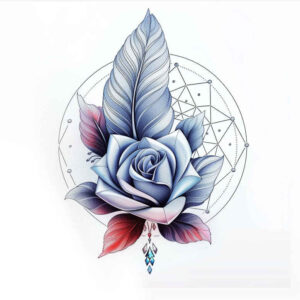
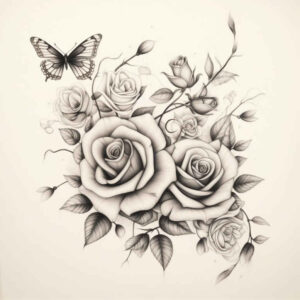
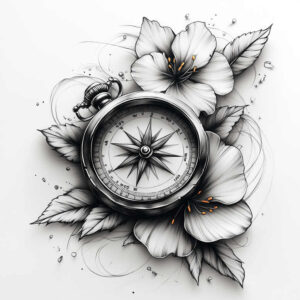
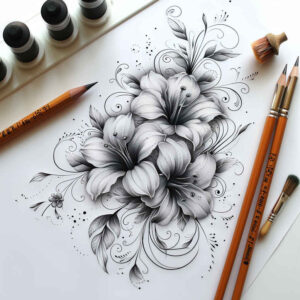
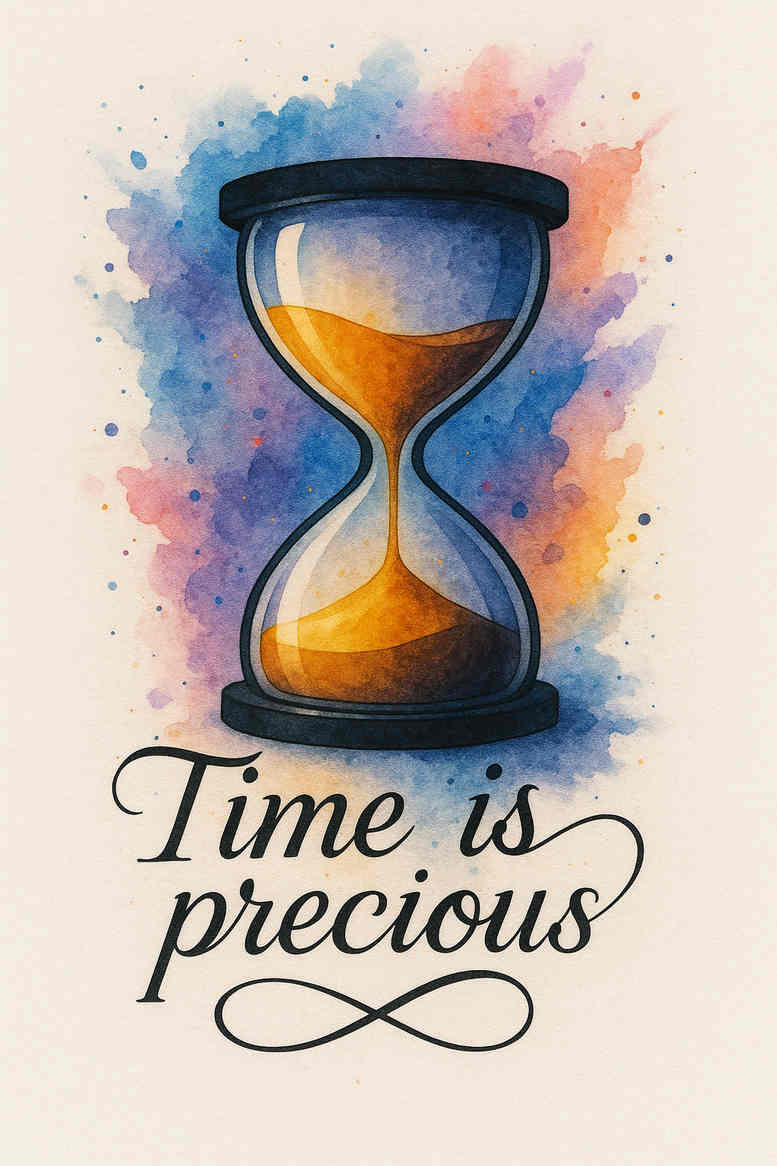
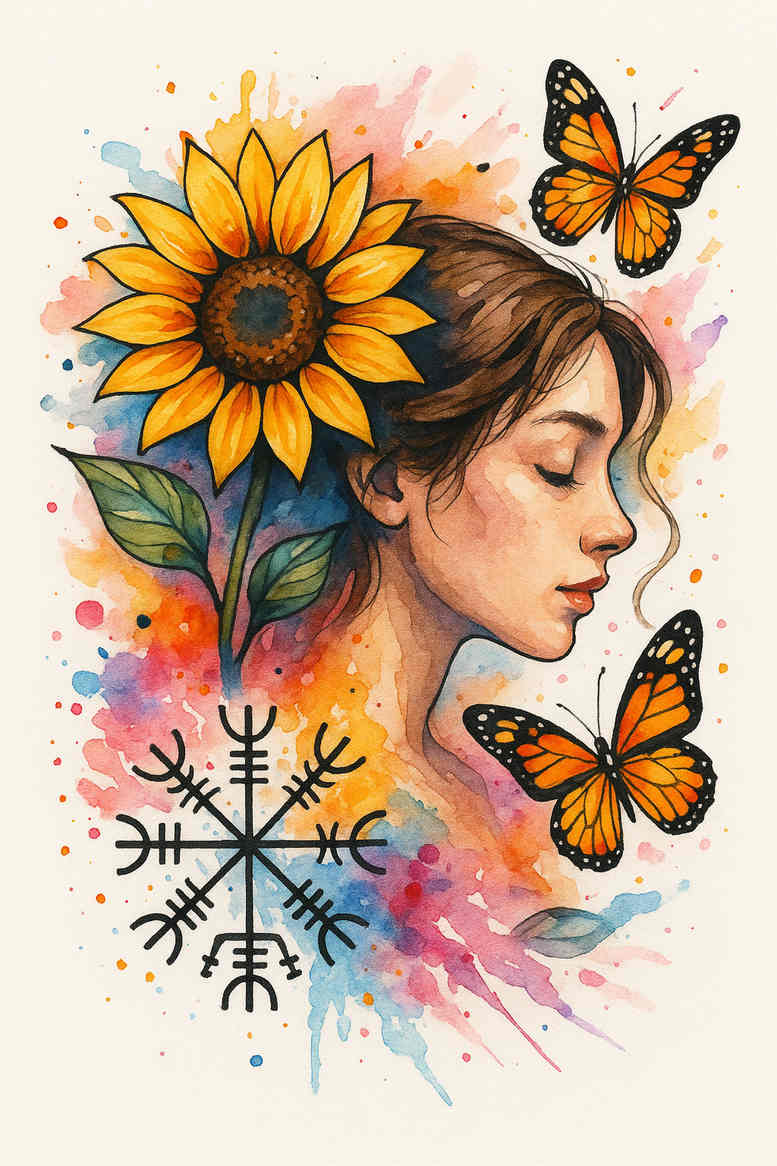
Presented as an AI-generated tattoo project, this piece explores a luminous watercolor bouquet of petals rendered in pink, purple, and blue tones. The central motif is a lush flower formed by overlapping, soft-edged petals that bleed into the surrounding negative space, with slender leaves curling around the bloom and delicate splashes that hint at motion. The technique emphasizes feathered gradients and subtle granularity, achieving a translucent quality that reads as delicate yet bold on skin. The design reads as a celebration of growth and renewal, with the petals suggesting a blooming process and the water-brush effect evoking the fluidity of life. Elements are arranged to allow easy adaptation as a standalone floral sleeve accent or as a small tattoo with high visibility on the wrist, forearm, or shoulder. Although primarily ornamental, the composition preserves potential symbolism: blossoms as a sign of new beginnings, petals as layers of memory, and the interplay of color as emotion expressed through ink. For tattoo artists, this concept acts as a robust starting point for a custom tattoo design, where linework can be refined into a fine line tattoo, or built up into a more painterly Japanese style tattoo in color. The current rendition deliberately stays in full color rather than black and grey, prioritizing luminosity and texture typical of watercolor tattoos, while maintaining readability at smaller scales for small tattoos. As an AI-generated tattoo project, it demonstrates how digital exploration can translate into body art concepts that balance aesthetics with practical placement. If a client desires more structure, the motif can be simplified into a single blooming lotus flower tattoo or extended into a floral sleeve with additional petals, stems, or geometric patterning. In essence, this is a vibrant floral study that invites customization, a testament to how contemporary ink can capture mood, movement, and meaning through color, light, and form. It also serves as an accessible reference for artists seeking to experiment with color theory and soft edge rendering in tattoo design, illustrating how watercolor techniques translate to skin while offering potential adaptations for small tattoos or larger compositions.