Description
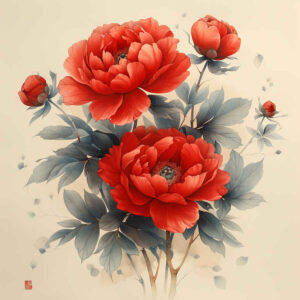
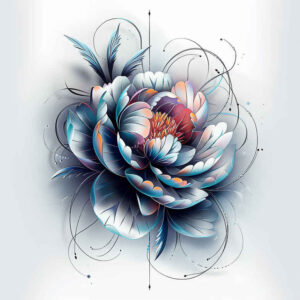
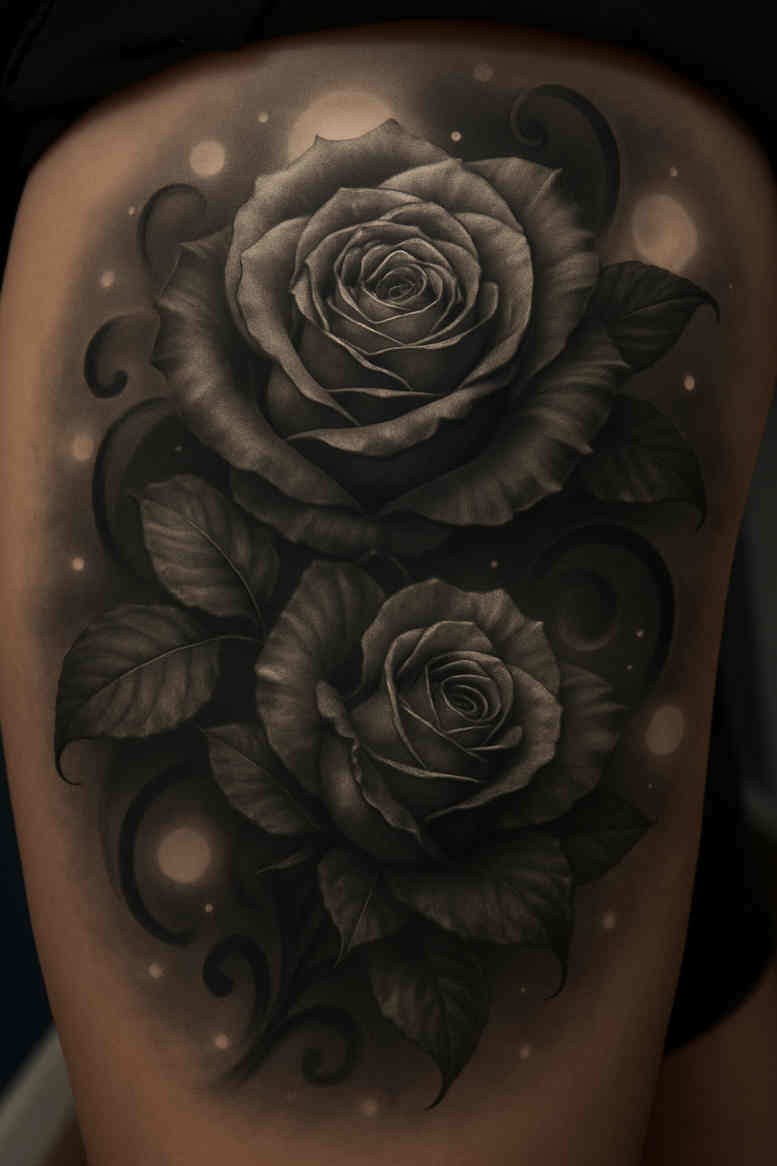
This piece presents a bouquet-inspired floral motif realized in a realistic tattoo design language. The focal elements are lush peony blossoms rendered in soft pinks and peaches, with saturated centers and a halo of delicate stamen visible in the core, complemented by deep green foliage. The composition emphasizes natural bloom forms, petal layering, and subtle shading to achieve a lifelike texture that reads clearly on skin from distance and up close. Executed in a full-color palette, the design leans toward a high-contrast realism approach while preserving warmth and an organic rhythm that guides the eye along a curving stem. The concept foregrounds a careful balance between bold color blocks and fine line detailing to emphasize petal edges, veining, and leaf contours, enabling a versatile fit for an upper arm, shoulder blade, or back panel. The peony, often associated with prosperity, romance, and renewal, provides meaningful symbolism within a floral tattoo, while the leaves introduce contrast and movement that echo natural growth. As an AI-generated tattoo project concept, this idea translates botanical accuracy into wearable body art, inviting a client to pursue a custom tattoo design that can be personalized with initials, dates, or additional motifs such as a lotus or infinity symbol for a broader narrative. The palette is designed to flatter a range of skin tones, with gradients that allow soft transitions between petals and shadows, and the composition can be adapted to a Japanese style tattoo by integrating restrained brushwork or to a more contemporary vivid realist mode depending on the artist’s preference. Technique notes include layering translucent petal washes, micro shading, and fine-line outlines to preserve readability on small scales, while ensuring a three-dimensional look through subtle highlights. In sum, this flower tattoo concept offers a timeless yet modern option for flower tattoos and meaningful tattoos, rooted in optical realism, color fidelity, and meaningful symbolism, and demonstrates how a botanical subject can be transformed into refined ink that doubles as body art.