Description
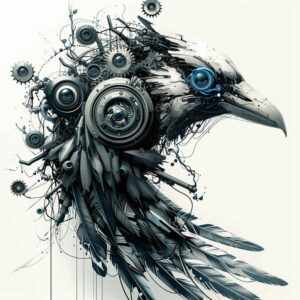
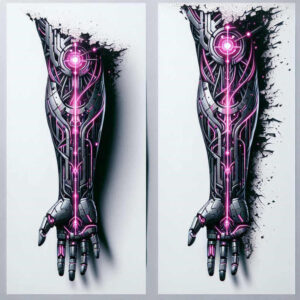
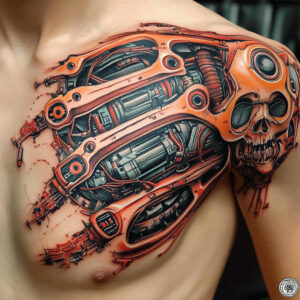
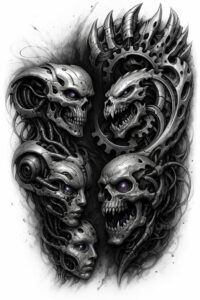
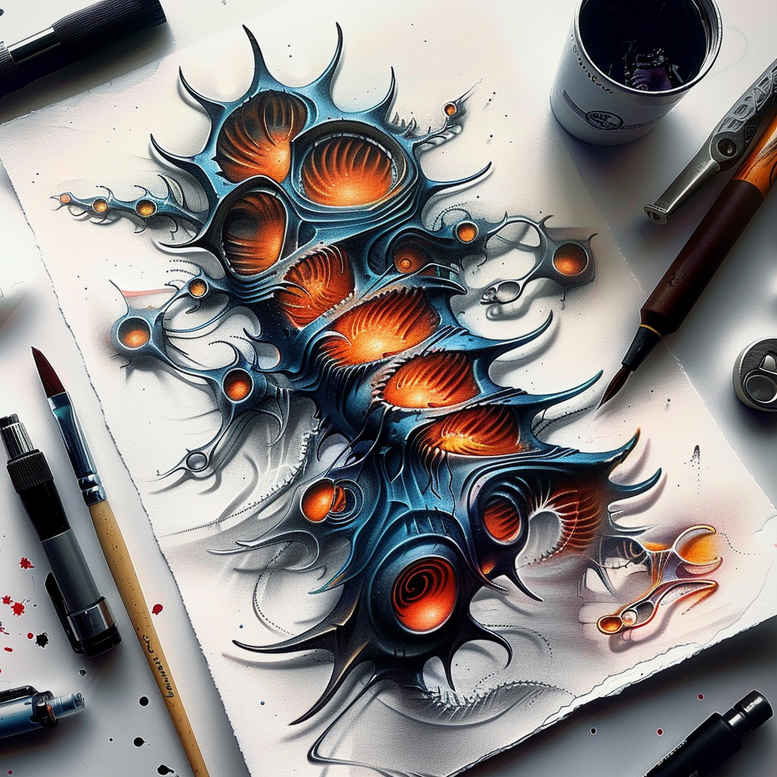
Colorful biomechanical tattoo design featuring interlocking blue tendrils and bright amber orbs unfolds as a study in synthetic anatomy and decorative engineering. The composition runs along a central axis, where a spine-like line of tendrils winds through layered segments that resemble titanium plates, creating a sense of motion as each blue strand threads between positive and negative spaces. The orbs act as energy cores, their warm orange glow contrasting with the cool blue of the surrounding filaments to create focal points. The piece relies on crisp linework, clean edge definition, and careful shading to achieve a believable sense of depth, with subtle gradients that imply curvature and volume across a real skin surface. Repetition is a key feature here: the set of orbs and the interlacing tendrils form a repeating, pattern-like motif that can be extended or truncated to suit different body areas, making it versatile for forearms, backs, or rib panels. The color-forward approach elevates the biomechanical aesthetic, aligning with contemporary tattoo trend toward vivid, long-lasting hues while preserving readability on aging skin. In terms of symbolism, the concept invites readings of resilience and fusion—the body as a living machine that evolves through design. The idea is presented as an AI-generated concept, offering a solid starting point for a custom tattoo design that can be tailored with additional circuitry motifs, organic textures, or ornamental accents. For designers and clients, this piece demonstrates how biomechanical tattooing blends graphic geometry with anatomical reference, using repeating modules to achieve a rhythm that is both energizing and harmonious. The result is a dynamic, showpiece tattoo design that remains legible at scale and provides strong visual drama through color contrasts, line precision, and pattern-driven composition. Fixing the balance between negative space and dense color, the artwork remains adaptable to different placements while preserving the core biomechanical identity and the futuristic vibe that many collectors seek in modern body art. The artwork translates well to three-dimensional skin; the interplay of gradient shading and edge crispness ensures longevity; the design benefits from professional linework and precise color layering. Artists and clients alike can imagine optional additions such as subtle circuitry traces, micro-splines, or floral accents that echo the mechanical form without sacrificing cohesion. Together, these elements underscore why biomechanics tattooing continues to attract enthusiasts seeking meaningful tattoos that combine technique, storytelling, and striking color in a single body art statement.