Description
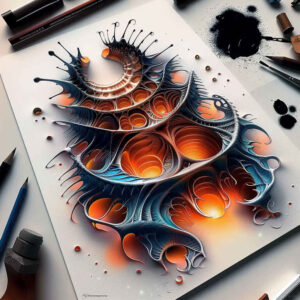
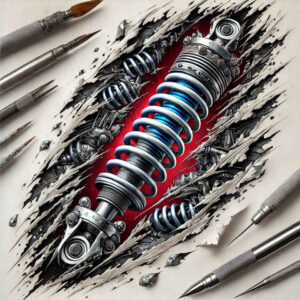
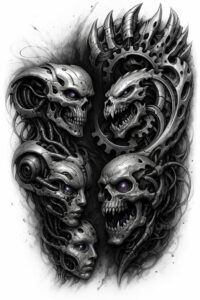
Biometric fusion inks an artistically engineered biomechanical tattoo design that intertwines living tissue with engineered hardware. The central motif is a sinewy tentacle that coils along the skin, its surface punctuated by circular voids that reveal inner gears and bone-like structures. The palette uses blue accents contrasting with copper tones to emphasize mechanical joints and organic forms, giving a sense of depth and motion. The composition blends high-detail linework with soft shading to create a three-dimensional illusion, inviting the eye to follow the curve from tip to base. This concept plays with the tension between nature and machine, a common theme in biomechanics-inspired tattoo art. The tentacle spirals through a lattice of tubes and rib-like supports, suggesting movement across the body as if the skin had become a living chassis. In terms of style, this piece sits firmly in the biomechanical category, with elements reminiscent of industrial anatomy and cybernetic aesthetics. The surgical look is achieved by fine line work, gradient shading, and crisp edge work that reads well in both color and monochrome contexts. The blue and copper color scheme adds a cool metallic glow that enhances the sense of resilience and transformation. As a concept, this tattoo design is well suited for clients seeking dramatic statement pieces that incorporate mechanical motifs without sacrificing organic grace. The piece works across shoulders, back or thigh and can be adapted to tighter canvases or larger expanses for maximum impact. AI-generated inspiration often explores such biomechanical silhouettes, pushing the boundaries of what a custom tattoo design can express, while remaining grounded in recognizable symbols like gears, bones, and tubes. For collectors of meaningful tattoos, this design speaks to transformation, resilience, and the fusion of flesh with engineered art. Texture, contrast, and negative space are discussed by artists and clients alike to tailor the piece to anatomy and movement, ensuring readability as the body flexes. The tattoo design is adaptable to color or grayscale presentations and can be scaled to create a focal center or a sweeping sheath. This concept exemplifies how modern biomechanical tattoos marry scientific imagery with artistic storytelling, inviting wearers to explore personal narratives about resilience, transformation, and the dialogue between biology and machinery. With its intricate layering and emphasis on form over ornament, it stands as a bold example of a contemporary fine line tattoo approach within the biomechanical genre.