Description
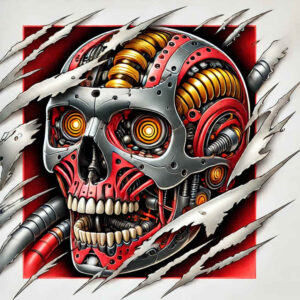
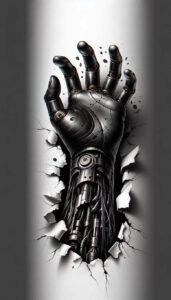
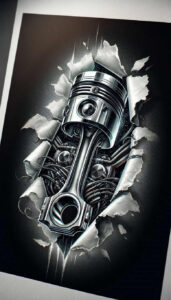
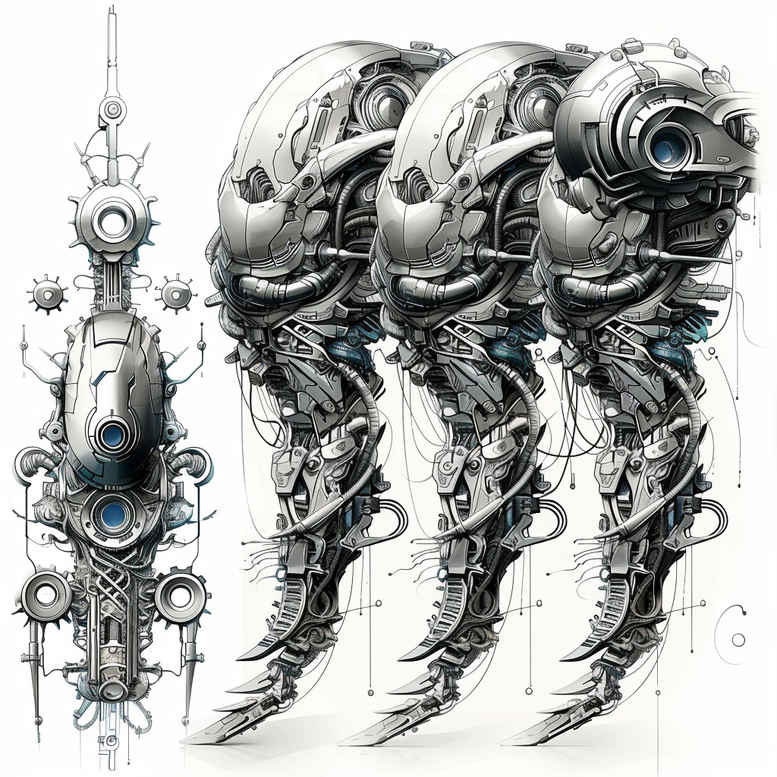
Biometric lines braid through a biomechanical silhouette, presenting a studied composition of nerve-like tubing, articulated plates, and interlocking gears rendered in black and grey. This biomechanical tattoo design fuses machine anatomy with body art, creating a spine-centered motif where a vertical column of plates and screws runs along an imagined anchor point on the back or arm. The three mirrored segments are sharpened by crisp linework and subtle negative space, giving the illusion of three-dimensional chrome interlocks pressing into living tissue. The overall aesthetic leans into cybernetic realism, with mechanically inspired anatomy that suggests function and form coexisting within organic tissue. Each element—gear, piston, rivet, and segmented armor—appears purposeful, designed to convey motion, resilience, and the tension between rigidity and flexibility. The black and grey shading is deliberate, delivering depth without color while preserving a sculptural, almost architectural quality, with highlights that mimic reflective metal surfaces. As a diagnostic-precision study, this AI-generated concept demonstrates how biomechanics can cross into high-contrast graphic art, merging dense line density with soft gradient shading to evoke metallic surfaces and cold light. This tattoo design speaks to fans of fine line tattoo and large-scale body art, offering a cohesive blueprint for sleeve concepts or standalone panels, ideal for ambitious collectors seeking a cohesive biomechanical narrative. The repeating motif emphasizes rhythm and symmetry, making the piece an intriguing study in pattern and repetition while remaining legible from a distance. In short, the composition is a bold exploration of machine-inspired anatomy, a visual dialogue between hardware and flesh, and a testament to how tattoo design can translate synthetic imagery into living skin through masterful technique, precise geometry, and deliberate storytelling.