Description
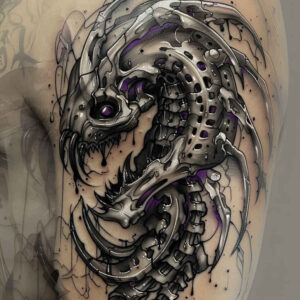
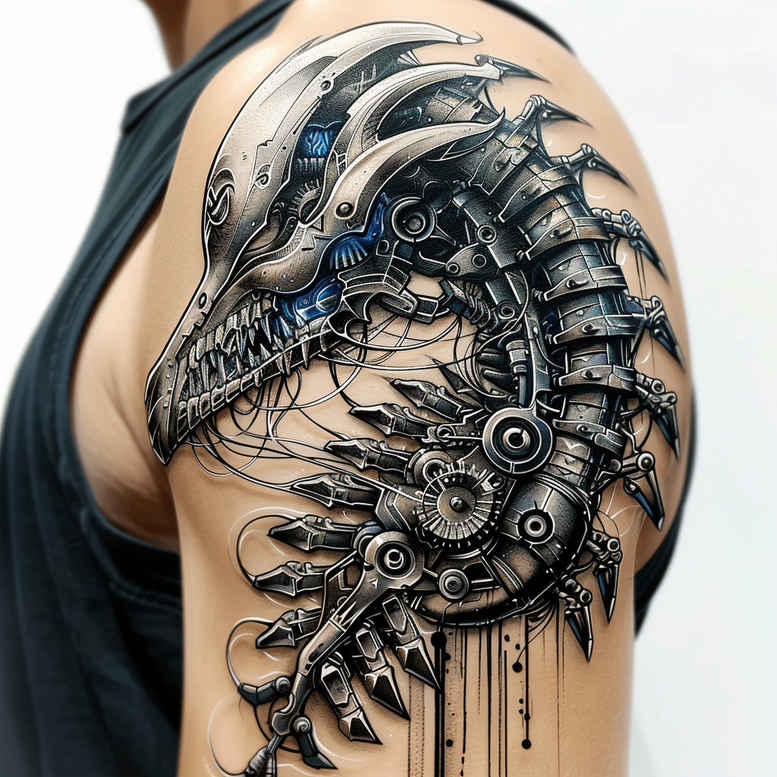
This biomechanical tattoo design fuses organic anatomy with industrial engineering, presenting a dragon motif rendered in black and grey to emphasize depth, texture, and motion. The composition centers on a curved spine of interlocking gears, pistons, and rib-like plates that weave along the shoulder and upper arm, creating a sculptural, three-dimensional illusion. Negative space around the edges enhances the contrast between skin and metal, while fine line accents guide the eye through the machinery and the dragon’s form. The symbolism blends fantasy and science, suggesting a seamless harmony between nature and machine; the dragon embodies transformation and resilience as it becomes a living mechanism, a metaphor for endurance and renewal. The design emphasizes biomechanics through technical detailing: gear teeth, bolts, and segmented plates are shaded to mimic light catching polished metal, while gradual shading evokes movement within rigid components. The result is a bold statement piece suitable for large coverage or sleeve work, with potential for accent colors or additional mechanical elements in future sessions. This piece sits squarely in the biomechanical and blackwork families of tattoo art, offering a dramatic narrative for seekers of meaningful tattoos blending anatomy with engineering. The concept, occasionally described as AI-generated, showcases how algorithmic forms can inspire dynamic ink compositions; the final design remains a strong, wearable work of body art that communicates strength, adaptability, and a fearless approach to personal storytelling. Its dark massing and high-contrast lines also make it an excellent choice for cover-up projects if required, while preserving the option to expand the piece as the wearer’s story evolves. Together, the interplay of organic silhouette and engineered components builds a cohesive narrative about adaptability and perseverance, ideal for collectors seeking a statement tattoo design. The artwork remains legible at large sizes and translates well to sleeves, back pieces, or chest panels, with opportunities to introduce color selectively for emphasis while preserving the monochrome integrity.