Description
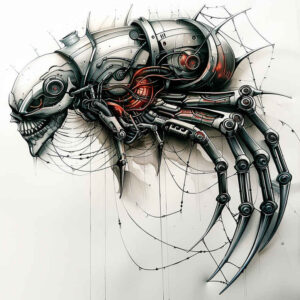
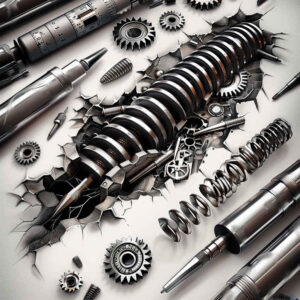
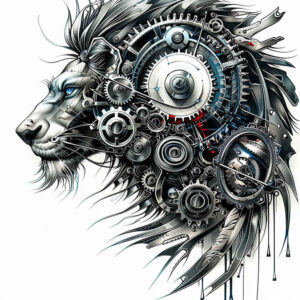
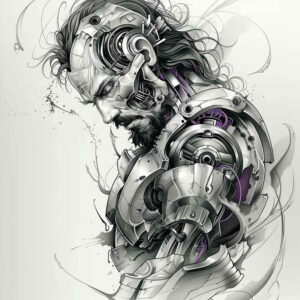
Biom Mechanical eagle tattoo design rendered in a sophisticated biomechanical style that fuses organic form with engineered geometry. The central motif is a regal eagle head, its gaze carved with precision by a lattice of gears, pistons, tubing, and blade-like fins that weave around the crown and neck in an industrial, almost sculpture-like rhythm. The composition relies on high-contrast black and grey shading to create three-dimensional volume, with crisp line work that suggests metal surfaces catching light and subtle bevels that hint at hidden mechanics beneath the skin. The design blends anatomical realism with mechanical elements, a hallmark of biomechanics, and the technician’s touch is evident in the way each cog interlocks with sinew and feather, producing a believable hybrid of flesh and machine. The result is both graphic and sculptural, suitable for bold placements on the shoulder, upper arm, back, or chest, and adjustable in scale to preserve detail from micro tattoos to large full-back works. Symbolically, the eagle represents vision, authority, and freedom, while the embedded gears and blades evoke engineering precision, resilience, and the idea of human augmentation through art. The work embraces a monochrome palette that ensures longevity of line integrity and depth across skin tones, making it ideal as a black and grey tattoo design that reads clearly at a distance and up close. It also offers a strong narrative for meaningful tattoos, especially for wearers drawn to futurist aesthetics, aviation, or symbolic power. This concept is presented as an AI-generated concept that can be refined by a tattoo studio to fit client anatomy, skin type, and placement, and it can be adapted for cover-up contexts if desired, with careful planning to ensure the mechanical elements remain legible over time. In market-ready form, the piece channels biomechanical technique, pattern-free but richly textured surfaces, and a balance between negative space and solid ink that fosters a dynamic interaction with the wearer’s body, turning the skin into a living canvas of steel talons and feathered movement.