Description
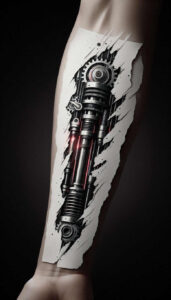
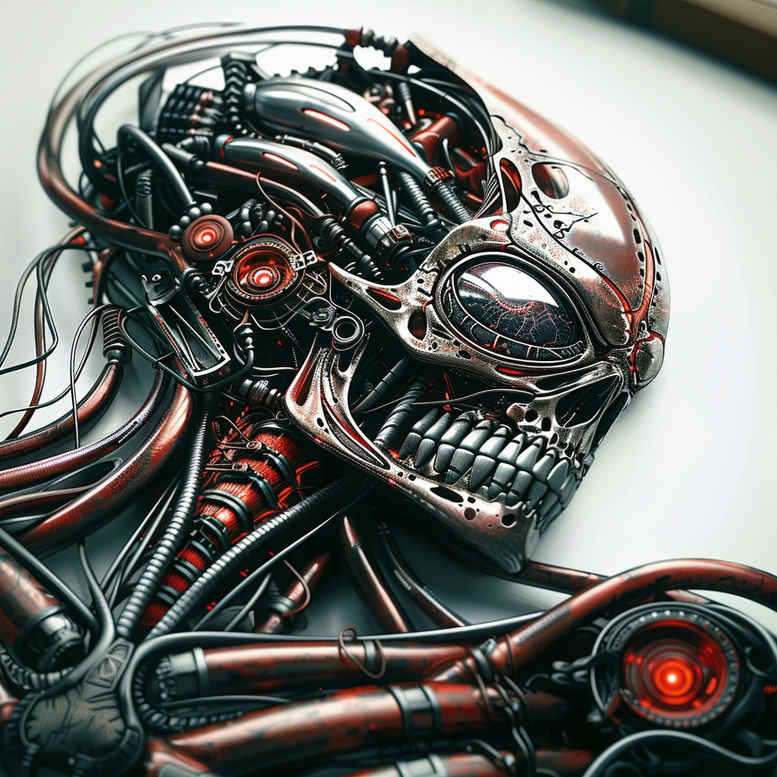
This biomechanical skull tattoo explores the fusion of flesh and machine in a dense techno-organic composition. The central motif is a skull enveloped by interlocking gears, tubes and cables that cascade along the jaw and temple like living circuitry. Rendered in a high-contrast black and grey palette, the piece relies on crisp lines and soft gradient shading to sculpt metallic reflections and a convincing sense of depth. The design blends biomechanical and heavy blackwork sensibilities, marrying machine elements with anatomical hints to create a hybrid anatomy that reads as both organic and engineered. Composition is angular and symmetrical, with a dominant central skull anchored by a ring of mechanical components that radiate outward, suggesting movement, transformation and resilience. Each gear, tube and connector is rendered with meticulous micro-details, giving the impression of a cybernetic upgrade rather than a mere tattoo; selective negative space around the jaw helps balance density and ensures legibility across the surface of the skin. The visual narrative invites the viewer to trace a path from crown to neck, symbolizing metamorphosis, human-machine integration and the idea that technology can become an extension of the body. This tattoo design is well-suited for large canvases such as the back, chest or shoulder, where high contrast preserves form over time. It sits at the crossroads of futuristic biomechanical aesthetics and timeless body art, appealing to fans of graphic lines, dimensional shading and patterns found in machinery. The piece is AI-generated, offering a futuristic concept for a cover-up-friendly design that can obscure earlier work if desired. In short, this black and grey biomechanical skull tattoo design makes a bold statement of strength and innovation, a meaningful body art project for anyone drawn to customs that fuse biology with engineered precision, while remaining a striking example of modern tattoo design. Placement notes emphasize clean line work and consistent shading to maintain readability on dynamic areas; color saturation should remain restrained to preserve the monochrome effect, and the full mechanical spectrum benefits from a broad canvas such as the upper back, shoulder, chest, or thigh to allow the intricate gearwork to breathe.