Description
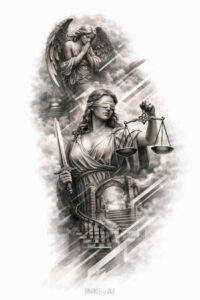
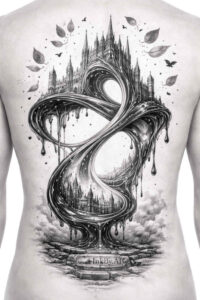
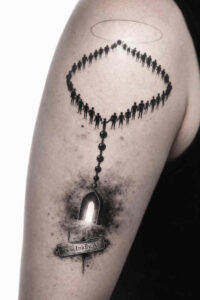
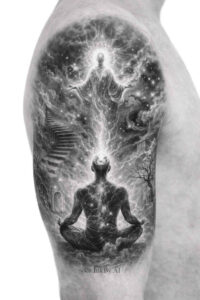
This AI-generated tattoo concept presents a bold, high-contrast illustration of two ancient Greek mythological figures set against the backdrop of a weathered temple ruin, executed in tight black and grey linework. The composition places the figures as the dominant focal point, their robes and facial features rendered with confident contour lines that convey strength and gravitas, while layered shading builds volume and depth through subtle cross-hatching and smooth graduations. The temple facade and surrounding columns form a structured base that anchors the piece, creating a classical architectural rhythm that guides the eye from the figures down into the ruinous setting. Symbolically, the juxtaposition of divine or heroic figures with ruins speaks to themes of legacy, endurance, and the evolving nature of myth, inviting a narrative that can be personalized by placement and size. The design embraces a balance between negative space and dense ink, ensuring legibility across a range of skin tones and ages, and its linear integrity makes it particularly adaptable for larger canvases such as a back or chest piece. The aesthetic leans into the illustrative tradition, translating storytelling into tattoo-ready form without sacrificing detail, while the restrained palette ensures timeless wearability and easy aging of the ink. As an AI-generated concept, this piece explores a fusion of classical iconography with contemporary tattoo craft, offering a versatile template for artists and clients who value both mythology and meticulous line work. Its density and contrast also render it an excellent cover-up option where darker tones are needed to mask previous work, thanks to the strong silhouettes and deep shadows that can blend with or overwrite underlying ink. The overall effect is a timeless, adaptable motif that invites personalization through pose, scale, and placement, whether on the shoulder, sleeve, or torso, and it stands as a testament to how myth can be rendered with modern precision and artistic storytelling.