Description
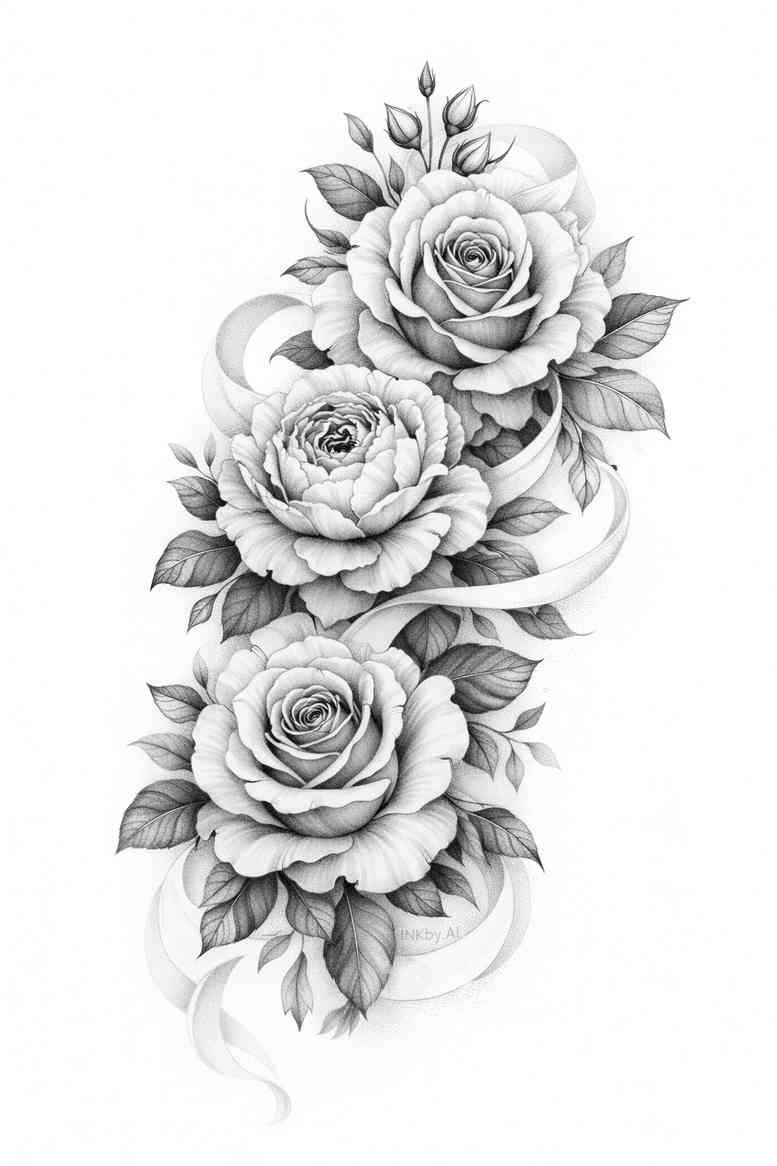
Black and grey realism tattoo image showcases a vertical bouquet of three roses, rendered with meticulous shading, fine line accents, and a balanced grayscale gradient. The central composition uses a tight grayscale range to sculpt the petals, with soft highlights that imitate light catching rim edges and subtle vein texture on the leaves. The three blooms span along a central axis, the foremost rose unfurling its cup while the two behind appear in varying angles, creating depth and a sense of movement. Surrounding leaves display a network of veins and serrated margins, while slender stems connect the blossoms and provide vertical rhythm. The negative space around the bouquet is used to emphasize the forms, with a quiet contrast that ensures readability on skin. The piece draws on traditional botanical tattoo motifs—lush petals, curling calyx, and naturalistic leaf arrangement—while embracing modern realism through controlled texture: micro-shading on petal edges, subtle stippling to suggest grain, and a careful balance between hard edges for structure and soft transitions for volume. The grayscale palette conveys timelessness; the lack of color shifts the focus to shape, rhythm, and the symbolic meaning of resilience and renewal associated with roses. In design terms, the vertical stack of blooms creates an elongated silhouette that lends itself to placement along the forearm, ribcage, back, or thigh; The arrangement can function as a standalone centerpiece or be extended into a larger floral sleeve or cascade. It is important to note that this concept is AI-generated, illustrating how algorithmic rendering can inform realistic floral tattoos while remaining adaptable to a tattoo artist’s hands, skin texture, and line-work preferences. Among potential variations, a skilled inker might adjust scale to preserve the integrity of petal curvature at smaller sizes, reflow shading to maintain contrast across the gradient, and tailor the leaf vein pattern to match individual anatomy, ensuring the final tattoo ages gracefully with time and wear, while staying faithful to the romantic and timeless essence of rose symbolism.