Description
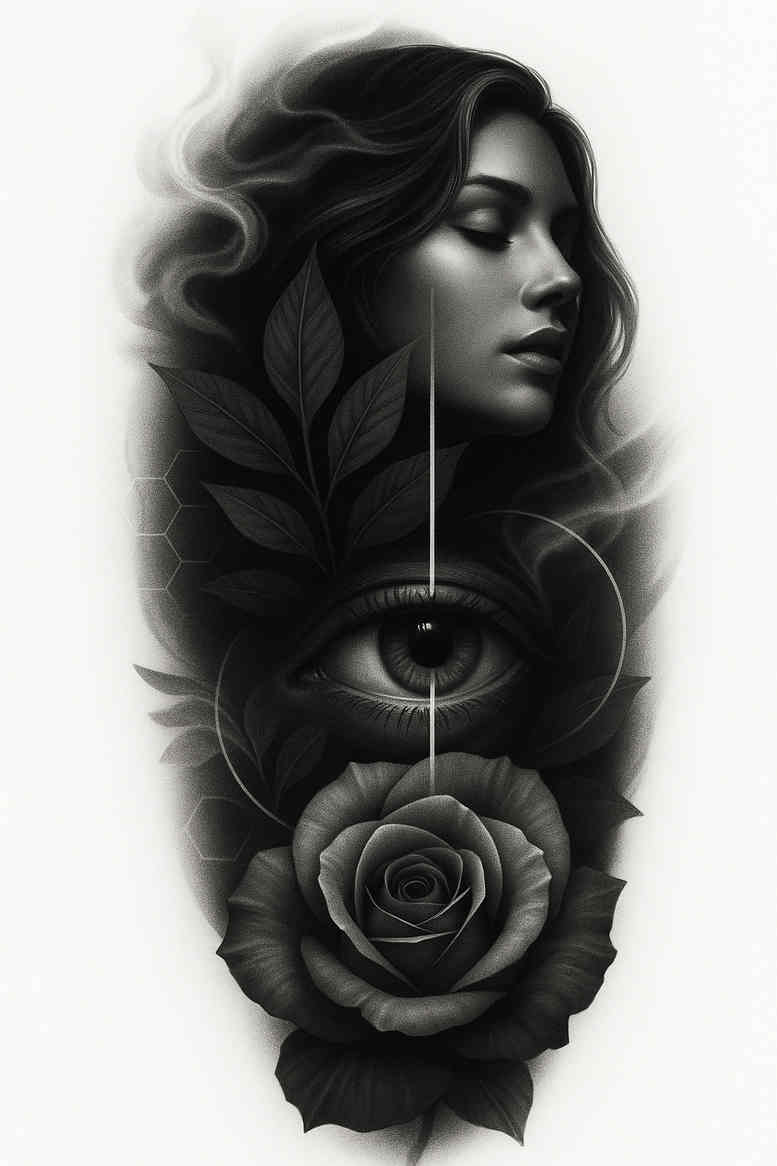
This black and grey realism tattoo design presents a refined portrait of a woman, rendered in smooth grayscale shading that captures subtle skin tone, texture, and emotion. The composition fuses a lifelike facial study with geometric linework that slices through the image in bold, angular facets, creating a dialogue between natural realism and contemporary abstraction. A vintage clock peeks from behind the head, its circular form a counterpoint to the sharp geometry, symbolizing time, memory, and the turning points of personal history. Surrounding the face, lotus-like flowers unfold with delicate shading and soft highlights, offering a natural counterbalance to the hard geometry and suggesting themes of growth, resilience, and renewal often found in flower tattoos. The design relies on strong contrast and controlled gradients to maintain readability on aging skin and across different body placements, making it a versatile piece for larger canvases such as the back, chest, or sleeve. The grayscale palette emphasizes form and volume, enabling the eye to travel from the intimate gaze of the subject to the expansive patterning that frames her. From a tattoo design perspective, the work blends classic black and grey realism with futuristic geometric motifs, producing a timeless optical effect that reads as both portrait and tattoo architecture. For meaning and symbolism, the portrait can symbolize inner strength, memory, and identity, while the clock hints at the passage of time and the flowers evoke life cycles and renewal. In terms of technique, the piece benefits from fine shading, careful linework, and balance between negative space and solid blacks, ensuring crisp edges as a long-lasting tattoo. AI-generated inspiration note: while the image showcases a crafted concept, a skilled tattoo artist can adapt it into a bespoke design reflecting personal narrative. This concept also welcomes variations in line weight and floral density to suit different body areas and skin tones. If a cover-up is contemplated, the substantial black areas offer a strong foundation for integrating scarring coverage or transforming existing marks into a cohesive new piece.