Description
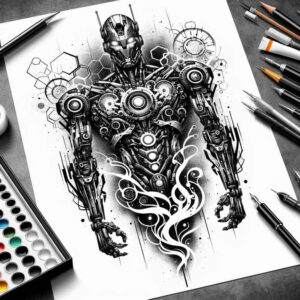
Cybernetic Arm tattoo design is a hyper-detailed, fine line study of a robotic limb rendered in black and grey. This AI-generated tattoo project explores the interface between human anatomy and machine engineering, weaving interlocking plates, pistons, screws, and circuit-like channels into a seamless forearm motif. The design emphasizes precise linework and restrained shading to create depth, texture, and the illusion of reflective metal in motion. Each segment reads as a separate panel: segmented armor plates trace the forearm, joints expose pistons and gears, and a meticulously articulated hand reaches toward the fingertips. The composition remains legible at modest sizes, making it suitable for small tattoos or as a basis for a larger sleeve by extending the panels along the arm. The artwork borrows a clean, almost architectural aesthetic that nods to Japanese-style tattoo discipline while staying within a modern, realistic black and grey idiom. Its meaning centers on resilience, transformation, and the fusion of organic intent with mechanical precision: the arm as a symbol of strength, endurance, and a future-oriented body art narrative. The careful alternation of bold outlines with delicate linework, combined with subtle negative space and stippling, invites a close, contemplative look and permits flexible adaptation by tattoo artists for different body contours. The concept serves as a meaningful tattoo design for clients seeking a futuristic, technology-inspired piece, while remaining versatile enough to function as a standalone forearm piece or as the cornerstone of a sleeve. Being an AI-generated tattoo project, it embodies the potential for collaborative, customized design refinement that translates personal stories into ink, body art, and tattoo culture. The imagery relies on a disciplined rhythm of planar facets and curved mechanical joints that guide the eye from wrist to fingertips, with light reflecting off bevelled edges to suggest weight and movement. This concept invites tattoo studios to experiment with shading variety, line weight, and proportion to suit the wearer’s arm length and skin tone, offering a flexible blueprint for a standalone forearm piece or a broader sleeve that resolves into negative-space panels around the elbow.