Description
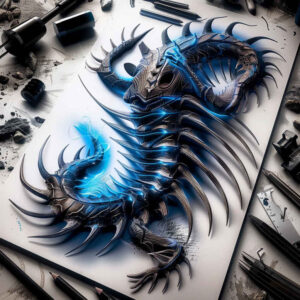
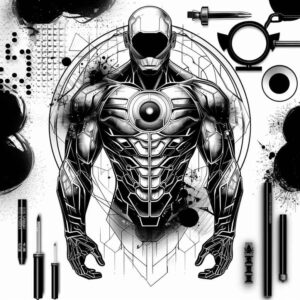
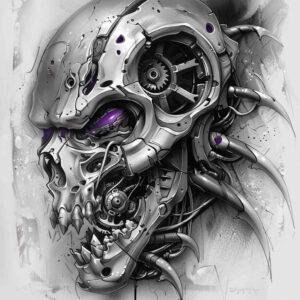
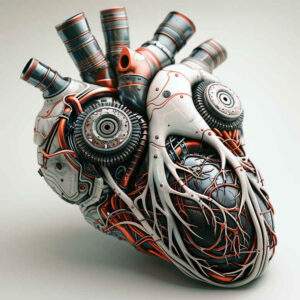
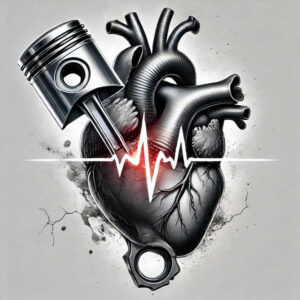
AI-generated tattoo project presents a mechanical architecture that emerges from a single elongated column of pistons and linkages, a black and grey study built from interlocking gears, cylinders, tubes, rods, and bolts that form a symmetrical, industrial silhouette. The design relies on fine line tattoo techniques to render crisp edges while preserving bold shadows that give the piece momentum on the skin. The central axis suggests movement, as if the device runs with an internal hydraulic system, while pendant components and trailing lines add energy and drama. The motif of gears and pistons has long symbolized progress, resilience, and the intersection of human ingenuity with machine, and in this composition the rigid metal components contrast with the potential of the wearer’s skin to evoke a cybernetic, biomechanical vibe. This piece could be scaled to a larger back or arm sleeve, or adapted to a compact forearm design, with the vertical orientation allowing a dramatic focal point on a linear surface. For collectors and studios seeking a modern, high-contrast reference, it offers a strong starting point for a custom tattoo design that aligns with trends in black and grey realism, fine line technique, and tech-inspired body art. If the goal is a cover-up, the dense linework and shading are ideal for concealing older tattoos while maintaining a modern silhouette. As AI-generated tattoo projects, it demonstrates how digital workflows can inform traditional ink by providing precise, scalable templates that tattoo artists can customize for individual bodies. The wording remains anchored in classic tattoo vocabulary: gears, pistons, cylinders, tubes, rods, connectors; the monochrome palette emphasizes texture and form, and invites the artist to add nuanced gradients or mercury-like highlights. In short, this mechanical masterpiece embodies a fusion of industrial accuracy and artistic finesse, ready to be translated into a personal emblem in black and grey ink, and it serves as a meaningful tattoo design example of how a futuristic machine motif can become body art, with plenty of room for interpretation and evolution as a commission.