Description
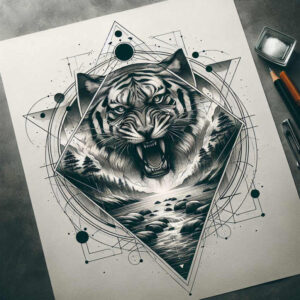
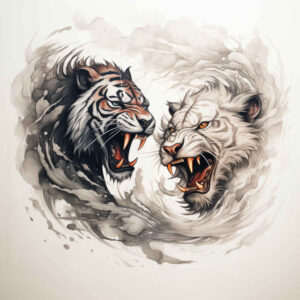
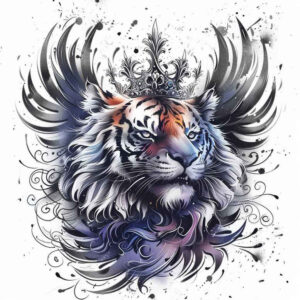
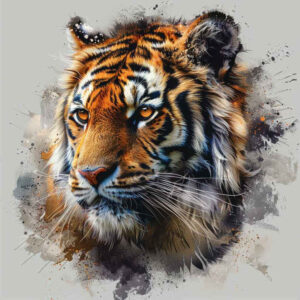
This tattoo project presents a highly realistic tiger portrait rendered in black and grey with selective color, emphasizing orange fur and piercing gaze. The composition is intensified by shattered, blade-like negative space patterns that slice through the tiger’s visage, creating a dynamic tension between organic fur texture and geometric shards. Executed with fine line precision, the piece relies on smooth gradient shading, subtle highlights, and crisp edge work to achieve lifelike depth on the skin. The core element is the tiger’s face—intense amber eyes, orange tones on the fur, and bold black stripes that contour the muzzle and cheeks. The surrounding negative space is carved with triangular slashes, a graphic pattern that enhances contrast and introduces a modern, almost sculptural quality. The technique blends photorealistic rendering with graphic, mask-like elements, resulting in a design that remains readable from a distance yet reveals intricate detail up close. This makes it ideal for a cover-up, as the dark areas can be used to conceal existing tattoos while the dramatic negative-space shards redirect attention to the tiger’s expression. The piece nods to wildlife portraiture while staying within contemporary tattoo trends, marrying realism with abstract geometry. The tiger, a symbol of courage, strength, and independence, is rendered to convey a fierce, focused presence, while the shards may symbolize disruption, change, or transformation. From a technical perspective, the tattoo adopts a layered approach: a base of black and grey shading for depth, overlaid with nuanced color bleeds to emphasize the orange fur in highlights, and precise linework around the eyes and teeth. For those seeking a bold, statement tattoo with meaningful tattoo design, this piece offers a compelling blend of classic animal realism and cutting-edge graphic elements. This AI-generated tattoo project demonstrates how modern ink applications can achieve dramatic contrasts and hyper-real texture—especially effective as a cover-up and as a striking example of pattern-driven composition in body art.