Description
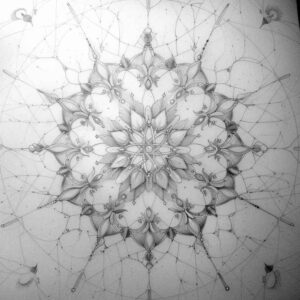
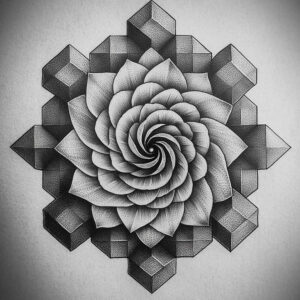
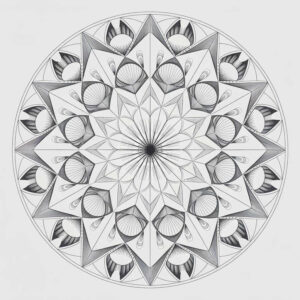
Presented as an AI-generated tattoo project concept, this piece features a mandala-inspired floral motif rendered in black and grey linework on gleaming white paper. The central core is a layered rosette with multiple tiers of pointed petals that unfold outward in perfect radial symmetry; each petal carries a delicate lattice of fine lines, hatching, and micro-dot shading that creates dimension without compromising the clean monochrome aesthetic. Surrounding the center, secondary rings evoke lotus-inspired geometry, suggesting themes of serenity and growth. Dangling elements—slender threads with tiny circles and diamond shapes—extend from the outer edge like ornamental pendants, adding jewelry-like complexity while preserving readability at tattoo scale. The artwork demonstrates precise stroke control, even spacing, and deliberate negative space to maintain clarity when translated to skin; the contrast between dense line clusters and open fields ensures legibility for both small tattoos and larger placements. The black and grey palette makes it suitable for clients seeking meaningful tattoos with a restrained look, where the lotus-like core can symbolize renewal and the mandala’s symmetry conveys balance and mindfulness. The piece resonates with Japanese-style tattoo vocabulary and tribal sensibilities, yet remains modern through fine-line technique and digital crisper edges. This concept showcases how pattern, precision, and negative space interact to form a cohesive body of ink, and it functions as an excellent template for a refined custom tattoo design. As an AI-generated tattoo project concept, it illustrates how algorithmic ideation can inform traditional tattoo design workflows from sketch to stencil. In short, the work is a rich, pattern-heavy design concept suitable for small tattoos or expansive back or sleeve layouts, blending craft with symbolism and remaining faithful to the language of ink, body art, and meaningful tattoos.