Description
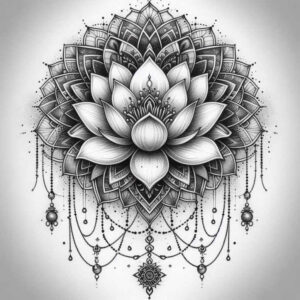
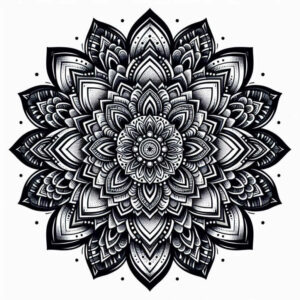
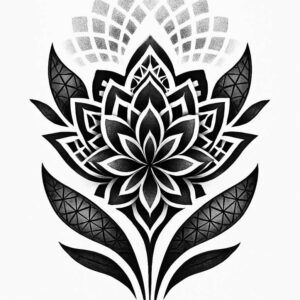
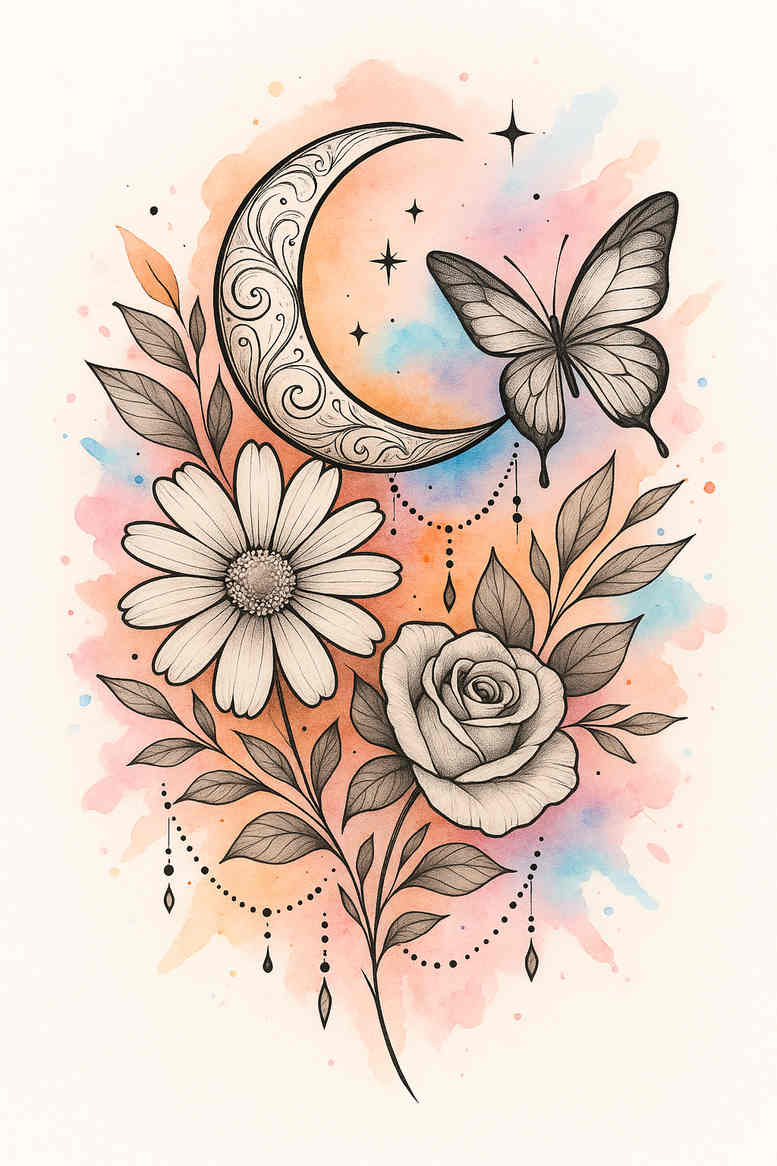
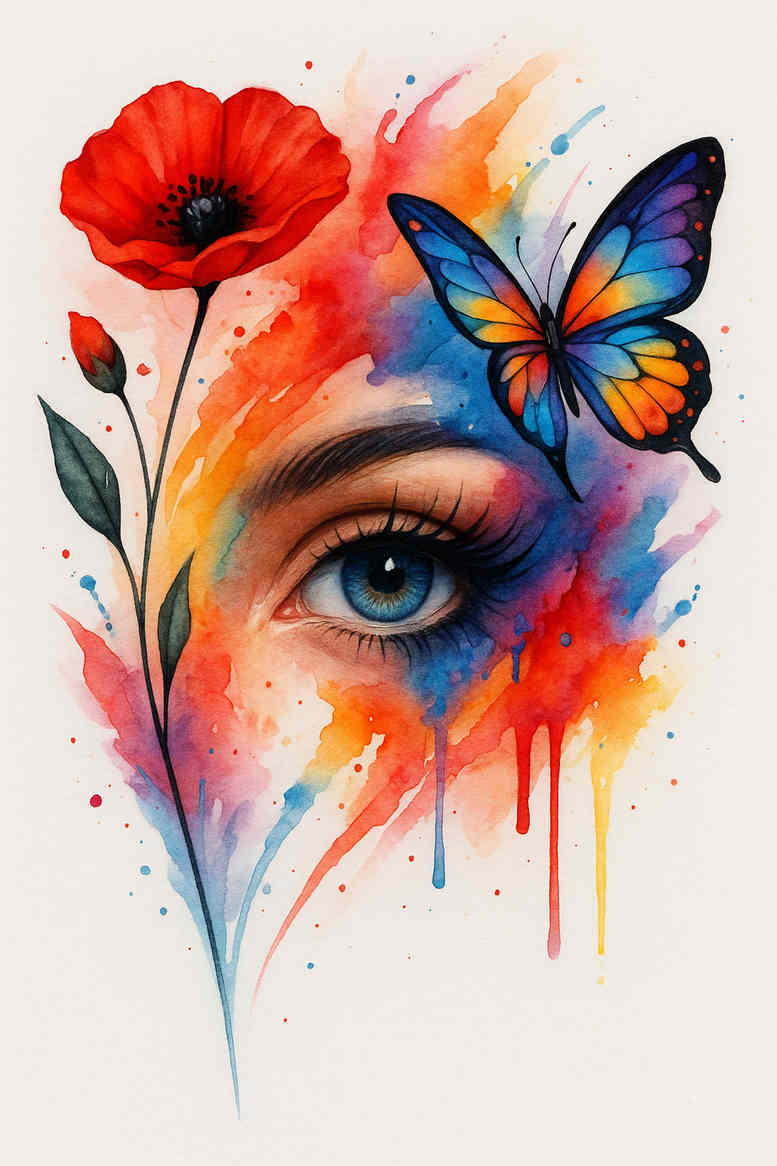
This is an AI-generated tattoo project. The piece presents a black and grey mandala bloom composed of a central radiating core and concentric rings of petals, each outlined with precise fine lines and shaded with delicate dotwork to create depth without overpowering the skin. The design relies on symmetry and geometric discipline, with the petals dovetailing into a circular mandala that reads as a blooming floral mandala when inked on the body. The outer ring introduces angular, polygonal accents and small dots that anchor the composition, allowing strong contrast and clarity even as it scales from small to large placements. The technique emphasizes fine line tattoo quality: crisp outlines, controlled shading, and a restrained use of negative space so the pattern breathes and maintains legibility with age. In tone and approach, the piece fits within the black and grey spectrum and can be interpreted as a lotus flower tattoo or as a broader meditation on balance, infinity, and growth—a theme frequently chosen for meaningful tattoos. For clients seeking a cover-up, this pattern is particularly appealing: the dense black ground and layered shading provide excellent concealment for older, darker tattoos while preserving a striking graphic presence. The composition is designed as a custom tattoo design that can be placed on the forearm, shoulder blade, back, or calf, adapting to different body contours while preserving its radial harmony. From a stylistic perspective, the design nods to Japanese-inspired precision and modern pattern-driven aesthetics, while staying accessible to fans of fine line tattoo, black and grey, and body art in ink. As a stand-alone statement or as part of a larger sleeve, it offers a versatile, timeless option for those who value clarity, symbolism, and craftsmanship in tattoo design. Meaning-wise, the mandala represents unity and the journey toward wholeness; the circular flow echoes cycles of life, while the flower motif suggests renewal. For the artist, the work invites disciplined alignment of lines, even tension between negative and positive space, and careful grading of shading to ensure the piece remains legible as a tattoo design over time. The result is a versatile pattern that reads clearly in monochrome and remains adaptable to different skin tones, skin textures, and placement choices. It also demonstrates how an AI-generated concept can translate into practical tattoo artwork that a skilled artist can refine and tailor to a client’s anatomy. If the client is seeking a piece with meditative symbolism, the combination of mandala geometry and floral softness can be scaled to express different degrees of intricacy without sacrificing readability. Finally, the work stands as a robust example of a cover-up-ready tattoo project: its dense black shading, dense line work, and pattern-driven composition help mask underlying tattoos while delivering a precise, artful body-art outcome that remains legible for decades. Artists can experiment with line thickness variations, dot density, and spacing to customize the final look for a rose tattoo design or a lotus tattoo motif.