Description
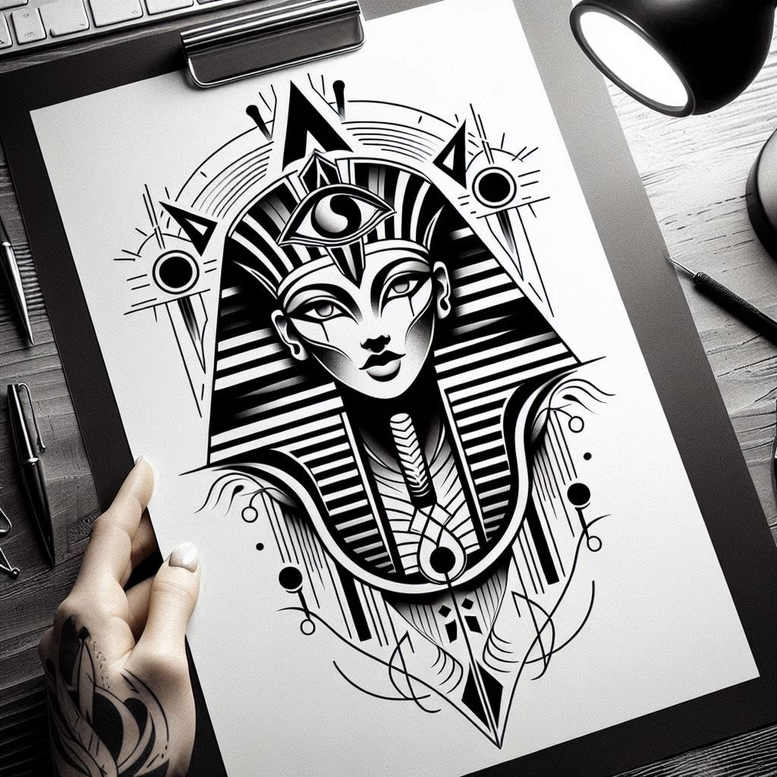
AI-generated tattoo project: this image presents a black-and-grey linework portrait of an Egyptian queen crowned with a stylized headdress and the Eye of Horus at the center. The design fuses ancient iconography with crisp geometric precision: alternating bold stripes across the headdress, circular orbs, and angular facets create a hypnotic frame around the queen’s serene face. Fine lines define delicate features, while solid black blocks carve depth and contrast, giving the composition the intensity of a graphic print translated to skin. The Eye of Horus sits as a protective centerpiece, its outline guiding the viewer’s gaze and imbuing the piece with symbolism of foresight and royal authority. Ornamentation around the head and shoulders blends straight lines, arcs, and motifs reminiscent of lotus petals and ceremonial jewelry, allowing the motif to scale gracefully from a small anchor to a larger back or sleeve tattoo. The piece’s black and grey palette suits a cover-up strategy, as dense shading can effectively mask older tattoos while preserving crisp edge definition for future refinements. For clients seeking a meaningful tattoo design with a strong aesthetic, this composition functions as a robust template for custom tattoo design work, adaptable to Japanese-style or tribal-influenced directions, depending on placement. From a technical perspective, the drawing demonstrates controlled line weight, strategic negative space, and a balanced distribution of tonal values to ensure legibility over time as the skin ages. In the broader context of body art and ink, it embodies the fusion of digital ideation with traditional tattoo craft, offering a precise starting point for tattoo artists to tailor line density, shading, and scale. AI-generated tattoo projects like this illustrate how algorithmic creativity can inform meaningful tattoos while honoring cultural motifs and personal symbolism.