Description
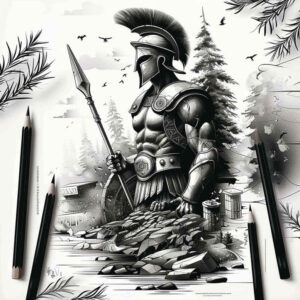
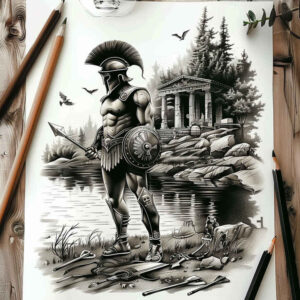
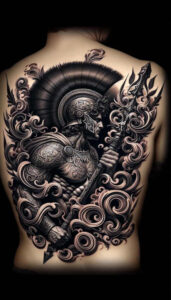
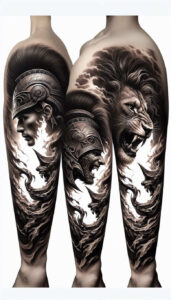
AI-generated tattoo project concept presented for a bold, cover-up ready illustration. The imagined scene centers on a helmeted warrior with ornate plate armor; the helmet bears antique embossing and a decorative band reminiscent of Greek key motifs, while skulls dot the chest plate and shoulder area. The composition is executed in black and grey realism, with a strong chiaroscuro that builds volume through meticulously layered shading, silhouette clarity, and high-contrast edges. Lightning branches crackle behind the figure, framing it with electric energy and adding dramatic motion to a still portrait. The texture work emphasizes metallic reflections, stone-like relief on the armor, and the weathered look of battle trophies, all rendered with crisp line work and smooth gray transitions. The pattern elements—geometric borders on the helmet and the repeated skull motifs—provide a graphic rhythm that keeps the piece legible from a distance while remaining intricate up close. The design is deliberately structured to read as a thigh or arm sleeve, with a central focal point and supporting detail radiating outward. Symbolically, the helmet suggests protection and vigilance; skulls evoke mortality and resilience; and lightning stands for power, intensity, and sudden change—concepts many collectors seek in meaningful tattoos. From a technique perspective, this concept leverages modern grayscale shading, soft feathering for skin transitions, and careful delineation to maintain readability over time, especially important for a potential cover-up. It also serves as a robust platform for a custom tattoo design, enabling the artist to tailor scale, placement, and line density to the client’s anatomy. As an AI-generated tattoo project concept, it demonstrates how a dark, graphic, highly detailed piece can conceal earlier ink by layering solid blacks and gradient shading, while preserving the sculpture-like integrity of a warrior head and weaponry. In practice, a skilled artist would incorporate larger black areas to mask previous work, then use negative space and highlight lines to reveal the new design’s form. This approach aligns with current tattoo trends toward bold black-and-grey realism, pattern-work, and mythic warrior imagery, culminating in a powerful, enduring body art statement that satisfies both aesthetic goals and cover-up requirements.