Description
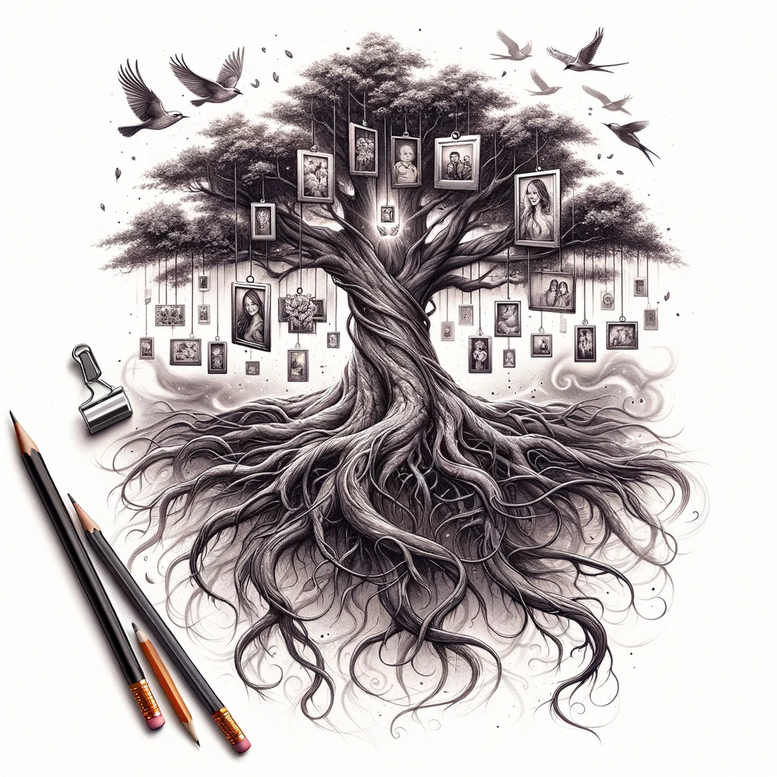
This tree of life tattoo design is rendered in black and grey with a sturdy central trunk and a wide canopy, its roots spreading like a network of memory and continuity. The composition places the tree at the center, while a series of small frames circles the upper branches, each containing a minimal silhouette evocative of spiritual figures from eastern traditions. The overall effect relies on fine line technique: precise contours, gentle shading, and subtle transitions that create depth without heavy ink saturation. The iconographic frames function as a portable shrine within the skin, inviting contemplation of wisdom, compassion, and protection as life paths unfold. Symbolically, the tree embodies growth, resilience, and the interconnectedness of all beings; the roots anchor heritage and origin, the trunk signifies strength in the present, and the branch network represents choices, learning, and the quest for meaning. The repeating element of framed panels emphasizes rhythm and balance, turning the design into a pattern-like meditation that can span a larger surface if extended into a sleeve or back piece. This tattoo design blends nature-inspired geometry with sacred iconography, offering a meaningful body art option for those who value universal spiritual symbols without aligning with a single tradition. The black and grey palette enhances texture—bark grain, leaf shadows, the soft glow around the framed silhouettes—and makes the piece suitable for years of maturation on the skin. As an AI-generated concept, it carries a contemporary, gallery-like quality that invites tattoo artists to adapt the proportion and placement to individual anatomy while preserving the harmony of line, shade, and symbolic language. Viewed as a meaningful tattoo concept, it speaks to the wearer as a map of memory and belief, allowing personal elements to be inserted into the frames for a bespoke narrative. The design can be executed with minute details for a refined look or scaled up for dramatic impact, relying on negative space to keep the composition legible over time. The use of repeating frames also allows for continuing the motif in future sessions, building a cohesive narrative across larger panels.