Description
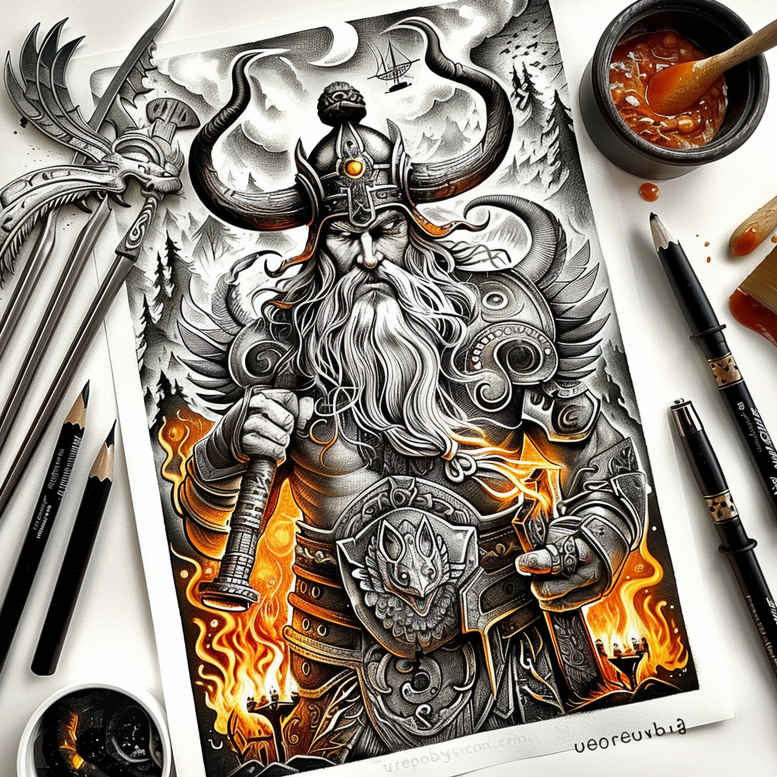
Perun, the Slavic god of thunder, rises as a monumental tattoo design in black and grey with selective orange flame accents. This concept presents a battle-ready warrior figure wearing a horned helm and intricate armor, a nod to ancient mythic motifs rooted in Slavic tradition. The central silhouette is framed by stylized bolts of energy and fiery embers that lick the ground, suggesting the god’s mastery of storm and lightning. The composition emphasizes strong vertical lines and dense negative space, allowing dramatic contrast between the hero’s iron-clad form and the smoky backdrop. The skillful use of fine line shading and smooth grayscale gradient creates a striking realism while preserving a timeless, mythic aura. Skull motifs along the edges evoke the underworld boundary and remind the wearer of mortality and protection, while reinforcing the warrior ethos common to sacred tattoos. The flames act as kinetic energy and a halo of power, guiding the eye toward the god’s stern expression and the weapon raised in his hand. The meaning of Perun tattoos centers on resilience, dominion over nature, and ancestral heritage; this design translates those themes into a wearable narrative: a guardian of order, a force that channels thunder into ink. It embodies meaningful tattoos that connect personal strength with a cultural pantheon, appealing to lovers of tribal tattoo, mythological symbolism, and bold black and grey aesthetics with fiery accents. Given the heavy black shading, the piece is also highly suitable for a cover-up, providing ample density to mask older ink beneath while the orange highlights keep the composition contemporary. As an AI-generated concept, it reflects current tattoo-art trends—high-detail line work, dynamic composition, and mythic iconography fused with grayscale shading. The line work is dense and polished, with careful cross-hatching to emulate stone and metal textures. Suitable placements include the upper back, chest, or thigh, where the composition can breathe and convey power, tradition, and a narrative-driven meaning.