Description
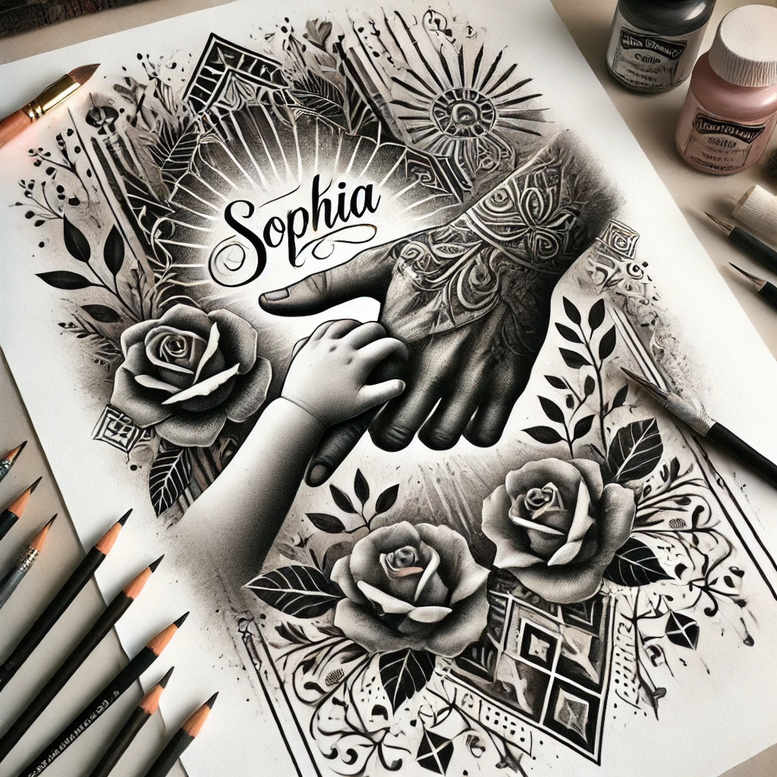
AI-generated tattoo project concept featuring a hand cradling roses and a surrounding geometric pattern, rendered in black and grey linework. The hand is modeled with precise contouring and soft shading to convey volume, while the roses provide delicate petals that contrast with the angular geometry. This tattoo design study emphasizes a balanced fusion of natural motifs and mathematical motifs, suitable for both small tattoos and larger commissions. The composition centers on the rose tattoo design as a symbol of love, memory, and renewal, with the hand representing care and intention; the geometric pattern adds structure, rhythm, and modern edge. Executed in black and grey ink, the piece relies on fine line technique and gradient shading to achieve depth and longevity on the skin; the result can be interpreted as a realistic tattoo with careful line weight. The concept invites customization: the number of roses, the density of the pattern, and the size can be adjusted to fit placements from inner forearm to sleeve. For clients seeking a Japanese style tattoo influence, a subtle adaptation of line weight and motif scale can preserve the essence while nodding to traditional aesthetics; alternatively, it can veer toward a tribal tattoo feel with more angular geometry. This flexible template works for meaningful tattoos and custom tattoo design explorations, combining flower tattoos with geometric body art in a timeless black and grey palette. As an AI-generated concept, it serves as a practical starting point for tattoo artists and clients to refine a personal, symbolic piece, with potential additions such as a lotus flower tattoo or infinity motif to express ongoing growth or eternal love. The design remains legible at small scales yet has depth for larger commissions, highlighting the interplay of ink, linework, and shading that defines a modern tattoo project and reinforces the enduring appeal of rose tattoo design, lotus and infinity motifs, and geometric pattern work in black and grey ink as body art.