Description
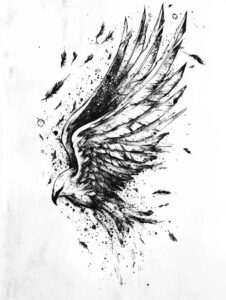
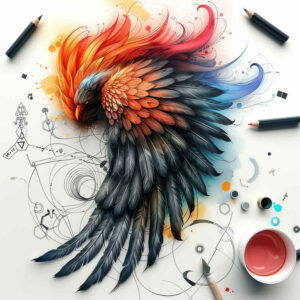
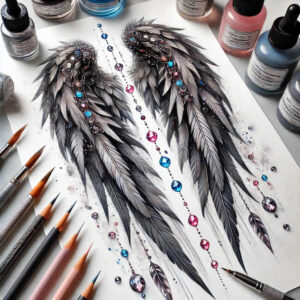
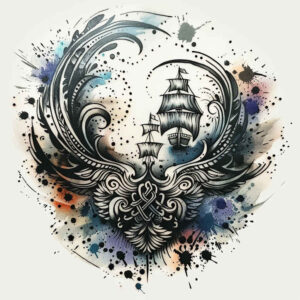
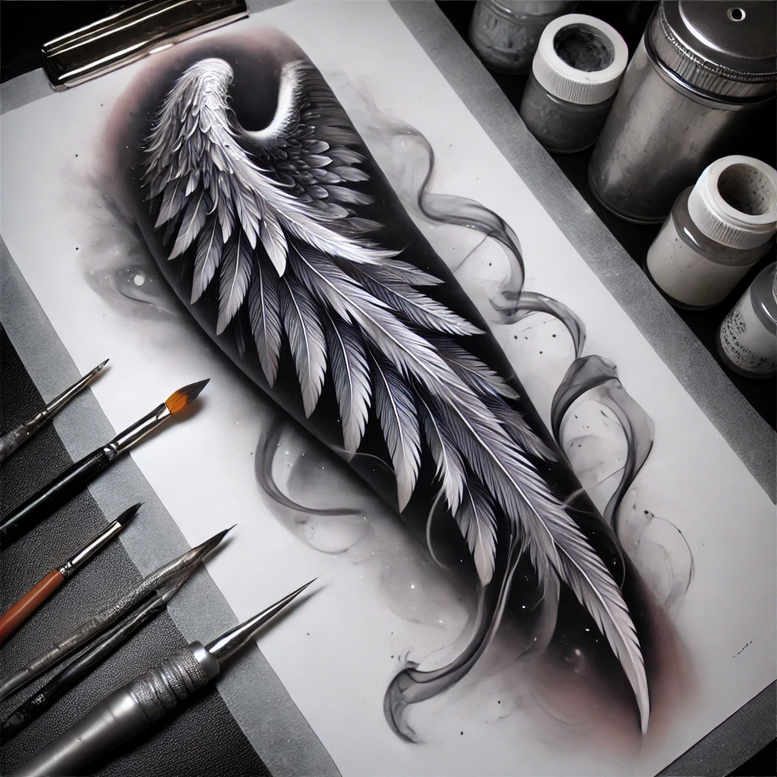
AI-generated tattoo project concept presented as a detailed grayscale study of a wing motif, this tattoo design showcases a feathered arc rendered in black and grey with soft transitions between each plume and crisp linework along the shaft. The artwork rests on a sheet of drawing paper, surrounded by drafting pencils, caps, and ink tubes, offering a candid view of the creative process from concept to ink. The feather wing design emphasizes layered plumage, dynamic shading, and a natural curvature that fits various placements, from forearm to shoulder blade. As a standalone piece, it lends itself to a realistic or fine line tattoo style, though it can be expanded into a larger back, sleeve, or chest panel depending on the client’s goals. The image embodies the kind of custom tattoo design that appeals to meaningful tattoos—suggesting themes of freedom, ascent, and resilience—whether you seek a subtle statement or a more intricate body art piece. While rooted in black and grey, this study invites future color explorations or cohesive integration with other motifs such as floral accents, geometric patterns, or Japanese-inspired elements. The pattern of repeating feathers provides rhythm in tattooing and can be adapted for small tattoos or a more expansive canvas; the wing’s curvature allows easy alignment with the natural contours of the arm or back. The piece speaks to the broader language of ink as personal storytelling in modern body art, aligning with realism-inspired textures and the precision of fine line tattoo techniques. This AI-generated tattoo project concept demonstrates how a high-contrast wing study can stand on its own as a design or be woven into a larger composition, underscoring the evolving role of tattoo design in contemporary studios.