Description
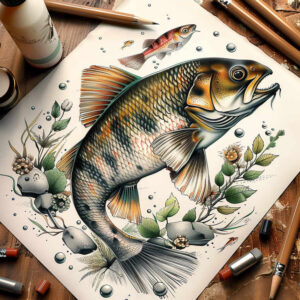
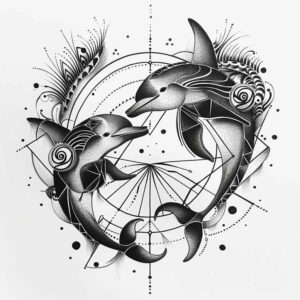
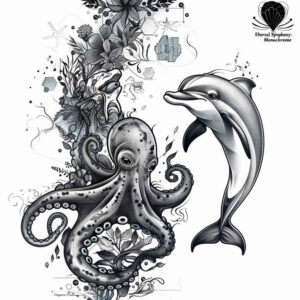
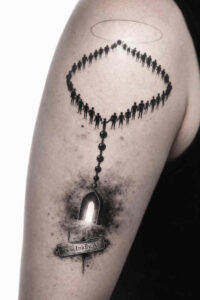
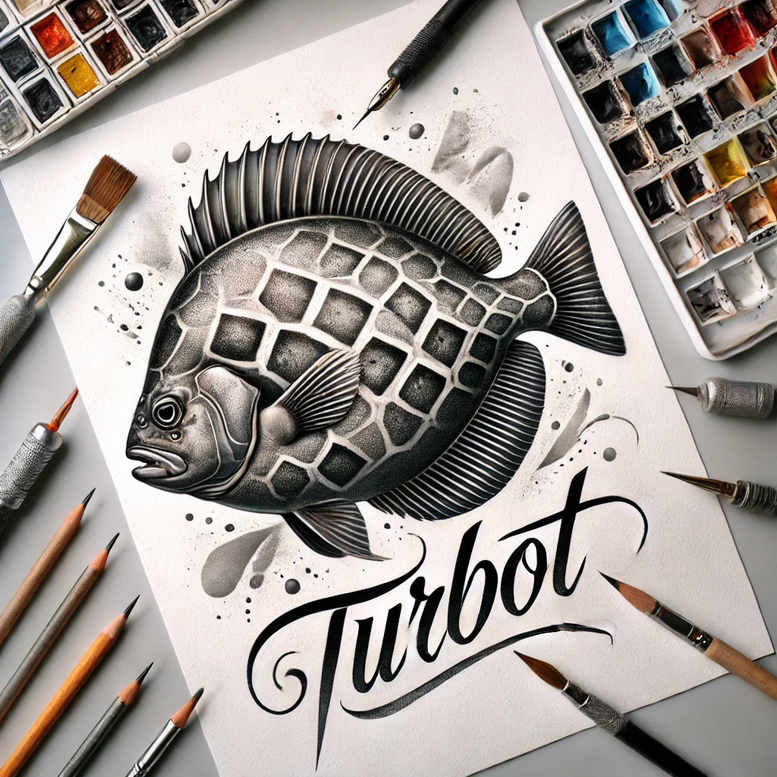
This geometric Turbot fish tattoo design is presented as a black and grey study on white paper, marrying a naturalistic fusiform form with a tessellated square pattern along the flank. Executed in a fine-line approach, the piece relies on precise contour lines, cross-hatching, and subtle dot shading to build depth while preserving a crisp, graphic edge suitable for small to medium-sized body art. The turbot’s body is rendered with a grid-like mosaic that nods to abstract and tribal tattoo influences, creating a recurring pattern that reads as both anatomy and ornament. The script Turbot on the page provides a calligraphic counterpoint to the angular body pattern, balancing movement with structure. The tattoo concept leans toward a Japanese-style sensibility in black and grey, with careful attention to shading gradients to achieve realism without color. It translates well as a standalone forearm or calf piece or as a component in a larger sleeve, allowing artists to adjust scale and line weight while preserving legibility. Symbolically, the fish evokes resilience and adaptability, while the geometric pattern suggests order within nature, a pairing that can carry meaning in meaningful tattoos, including themes like infinity, small tattoos, or floral integrations such as a lotus flower tattoo or rose tattoo design if expanded. This description is an AI-generated tattoo project concept intended for design exploration and client discussion, offering a robust reference for inkers seeking fine-line precision and pattern-rich textures in black and grey ink; it foregrounds the importance of clean line-work, shading, and composition in tattoo design, and it can be customized into a small or larger piece while retaining a cohesive graphic aesthetic. The design also invites variations such as adding a lotus flower tattoo design as a focal point within the pattern, or pairing with infinity tattoo motifs to convey continuity and resilience. For clients seeking small tattoos, this concept scales down without losing its structural clarity, while for larger pieces it offers a modular solution that retains readability of lines and shading. The current AI-generated concept demonstrates how algorithmic patterning can inform traditional line-work, providing a modern take for real-world tattoo design studios and clients who value precision.