Description
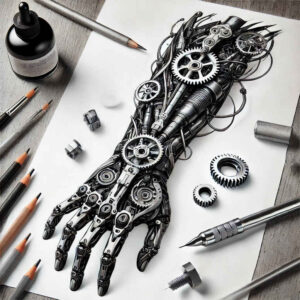
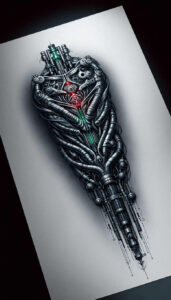
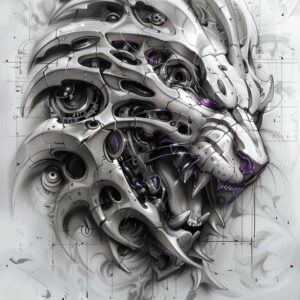
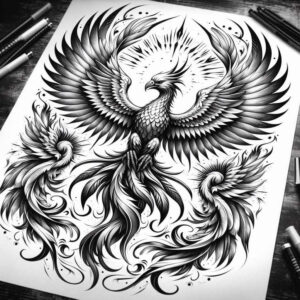
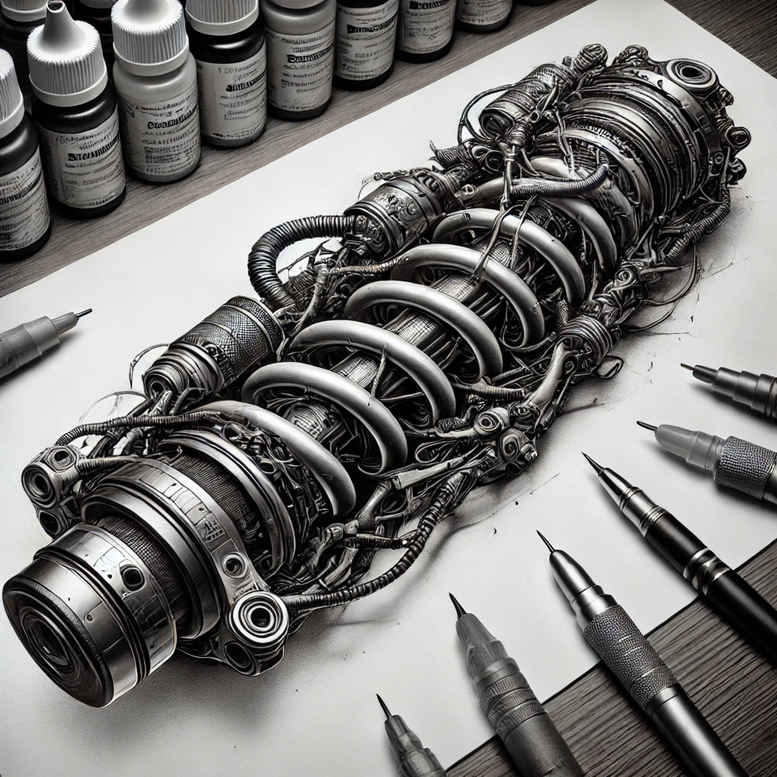
AI-generated tattoo project: a close-up study of a coil tattoo machine rendered in black and grey, designed to explore texture, line work, and negative space. The polished metal coils catch the light while the surrounding shadows sculpt depth, and the armature bar forms a rhythmic thread that guides the viewer’s eye along the gun’s silhouette. In the background, a row of ink bottles hints at the studio workflow, providing a subtle contextual counterpoint to the precise mechanical form. This composition functions as a strong tattoo design concept for those considering cover-up work, where a dark tonal base can be used to mask prior ink while introducing new motifs with controlled shading. The image nods to traditional methods and contemporary realism; its monochrome palette makes it versatile for black and grey pieces, from fine line tattoos to more substantial, high-contrast pieces. It also invites exploration of symbolic motifs such as a lotus flower, infinity, or geometric elements that can be adapted into a custom tattoo design, while maintaining a focus on the machine’s sleek mechanics as a backdrop to human storytelling. Viewed as an AI-generated tattoo project, it demonstrates how digital generation can inform studio practice, offering a reusable blueprint for clients seeking bold, shadow-rich body art. The description includes terms like tattoo, tattoo design, meaningful tattoos, fine line tattoo, black and grey, realistic tattoo, and ink to align with search intent and portfolio discoverability in modern body art contexts. Given the image’s dark tonal range, it stands as an explicit option for cover-up work, where prior tattoos can be concealed beneath new, thoughtfully shaded imagery. In practice, a tattoo artist could reinterpret this study into a bespoke piece that adapts to different skin tones while preserving the machine-inspired motif.