Description
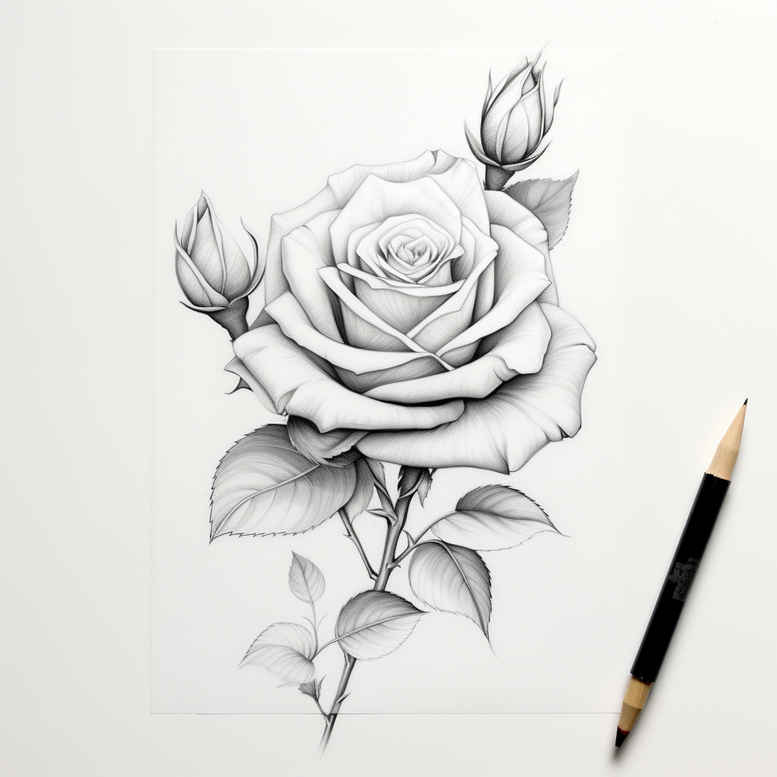
AI-generated tattoo project concept featuring a refined pencil study of a rose, a timeless symbol of beauty and renewal, rendered in black and grey with fine line precision. The central motif is a rose in full bloom, its layered petals curling outward, accompanied by a slender stem and a small cluster of leaves that frame the blossom. Subtle graphite shading builds volume, with delicate contrast between lighter highlights and deeper shadows to suggest velvety texture and natural curvature. The line work remains restrained and elegant, preserving a handcrafted feel while the pencil aesthetic adds a tactile, art-gallery vibe. Symbolically, the rose conveys love, growth, and resilience, while the surrounding leaves imply protection and change—an ideal narrative for meaningful tattoos. As a tattoo design, this concept leans toward a fine line black and grey style, suitable for a discreet small tattoo or as a larger composition in a floral sleeve or Japanese-inspired piece, depending on scaling. It can be adapted as a standalone rose tattoo design or integrated with other elements such as lotus flower tattoo motifs, infinity tattoos, or tribal lines to craft a cohesive body art story. Because this work is presented as an AI-generated project, it serves as a starting point for professional tattoo artists to refine placement, shading, and line weight, while preserving the essence of a botanical study. In practical terms, the composition allows flexibility across sizes and placements—forearm, wrist, shoulder—offering a timeless option for meaningful tattoos. The image emphasizes balance between negative space and inked areas, inviting interpretation and customization to suit the wearer’s preferences, with strong potential for adapting this rose study into various tattoo design contexts.